Social media has become an integral part of daily life, with over 5.4 billion users worldwide, accounting for nearly 68.5% of the global population.
While these platforms connect people and provide entertainment, about 210 million users are considered addicted, spending excessive time online and showing signs of dependency.
Excessive use of social media can lead to negative impacts on physical well-being, mental health, productivity, and social relationships, highlighting the need to understand and address them globally.
Continue reading to explore detailed statistics, trends, and insights into how social media addiction shapes behavior across different ages, genders, and regions.
Social Media Addiction Statistics (2026): Key Highlights
- Approximately 210 million people around the globe are addicted to social media as of 2026.
- Nigeria and the Philippines record the highest average time spent on social media.
- As per the report from the World Health Organization, about 11% of adolescents show unhealthy social media habits, finding it difficult to limit their use.
- In the United States, more than 60% of the students reported being addicted to social media.
- During the COVID-19 pandemic, around 70% of students reported increased use of social media platforms.
Overview of Social Media Addiction
Before delving into the details, here is a quick overview of social media addiction.
| Aspects | Key Stats |
|---|---|
| Global Social Media Users | 5.41 billion |
| Global Addiction | 210 million people worldwide |
| Daily Usage | The average user spends 2.5 hours per day |
| Highest Usage Countries | Nigeria, Philippines |
| Most affected age group | 18-29 years |
| Gender difference | Women: 32% addicted, Men: 6% addicted |
How Many People Are Addicted To Social Media?
Around 210 million people worldwide, approximately 3.9% of the global social media users, are addicted to social media in 2026. 33.14 million of these individuals are from the United States alone.
On average, people spend around 2.5 hours on social media, with many users checking their accounts multiple times throughout the day.
Social Media Addiction Statistics across different Countries
Countries in South Asia, Southeast Asia, and Africa tend to report higher levels of social media addiction.
For example, in India, an estimated 18.4% of social media users are considered addicted or at a high risk of addiction, meaning nearly one in five users show signs of excessive or compulsive use.
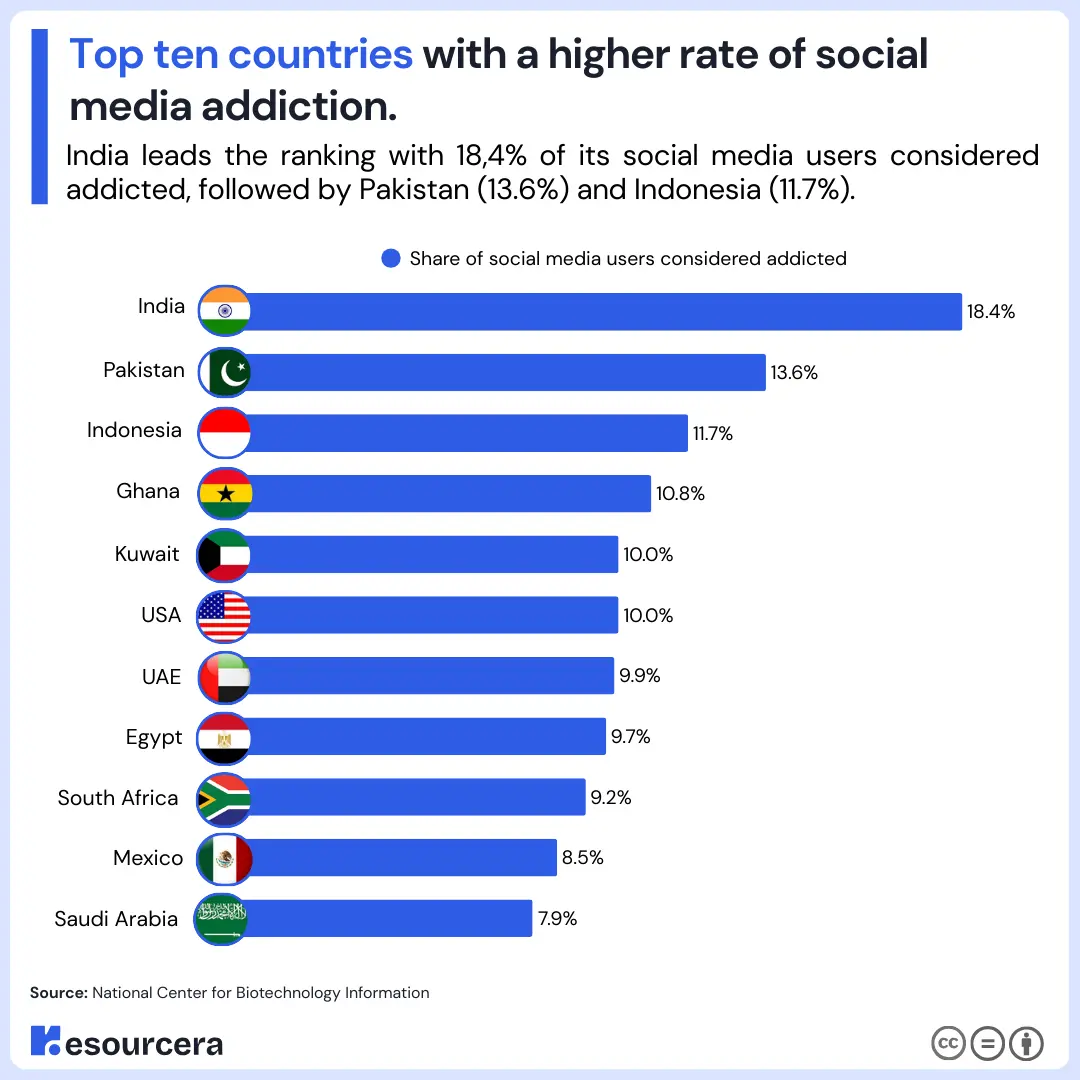
As per the reports from the National Center for Biotechnology Information, below are the top ten countries with a higher rate of social media addiction.
| Country | Share of social media users considered addicted |
|---|---|
| India | 18.4% |
| Pakistan | 13.6% |
| Indonesia | 11.7% |
| Ghana | 10.8% |
| Kuwait | 10% |
| USA | 10% |
| UAE | 9.9% |
| Egypt | 9.7% |
| South Africa | 9.2% |
| Mexico | 8.5% |
| Saudi Arabia | 7.9% |
Source: National Center for Biotechnology Information
Users in several developing and emerging countries spend a notably high amount of time on social media each day. Nigeria records the highest average usage at 4 hours and 49 minutes, followed by the Philippines at 4 hours and 1 minute.
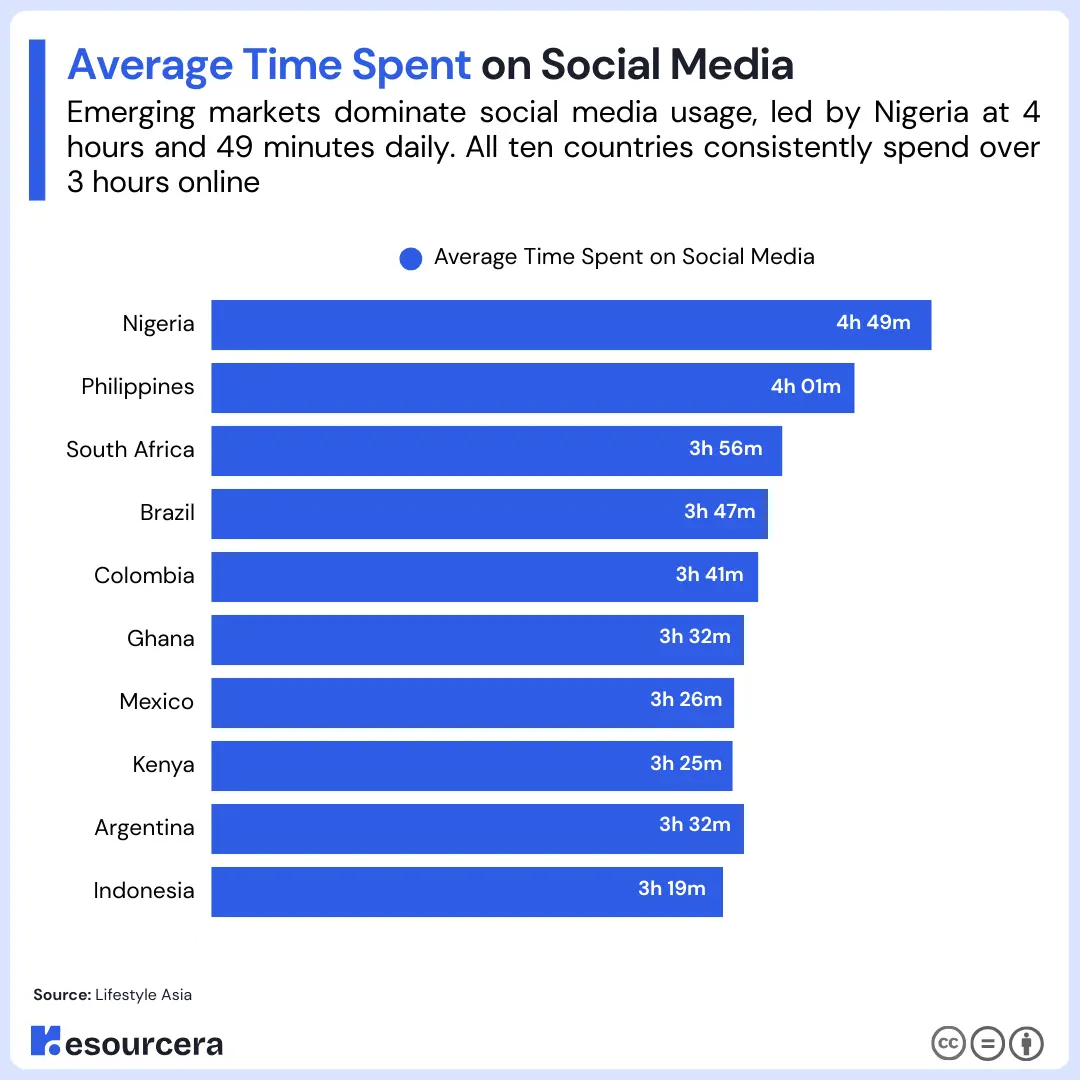
Below is a detailed breakdown of the countries with the highest average time spent on social media.
| Country | Average Time Spent on Social Media |
|---|---|
| Nigeria | 4 hours and 49 minutes |
| Philippines | 4 hours and 01 minutes |
| South Africa | 3 hours and 56 minutes |
| Brazil | 3 hours and 47 minutes |
| Colombia | 3 hours and 41 minutes |
| Ghana | 3 hours and 32 minutes |
| Mexico | 3 hours and 26 minutes |
| Kenya | 3 hours and 25 minutes |
| Argentina | 3 hours and 32 minutes |
| Indonesia | 3 hours and 19 minutes |
Source: Lifestyle Asia
Number of People Addicted to Social Media in the U.S.
In the United States, about 10% of the people are addicted to social media, which equals roughly 33.14 million users.
On average, Americans spend 2.5 hours per day on social media platforms, with teenagers and adults often spending 3 to 4 hours daily. This shows how widespread excessive social media use has become, especially among the younger age groups.
According to a report from the BBC, TikTok reached a confidential statement shortly before jury selection was set to begin in a major social media addiction case in California, avoiding further involvement in the trial. The lawsuit was filed by a 20-year-old woman, identified as KGM, who claimed TikTok’s algorithm encouraged addictive use and harmed her mental health.
The social media victims law center confirmed that both parties reached an amicable resolution, though the specific terms of the settlement were not made public.
Social Media Usage Across Different Platforms
The social media usage in the United States is widespread across multiple platforms. YouTube stands out as the most widely used platform, reaching 81% of Americans, followed by Facebook and Instagram with 69% and 40% of users.
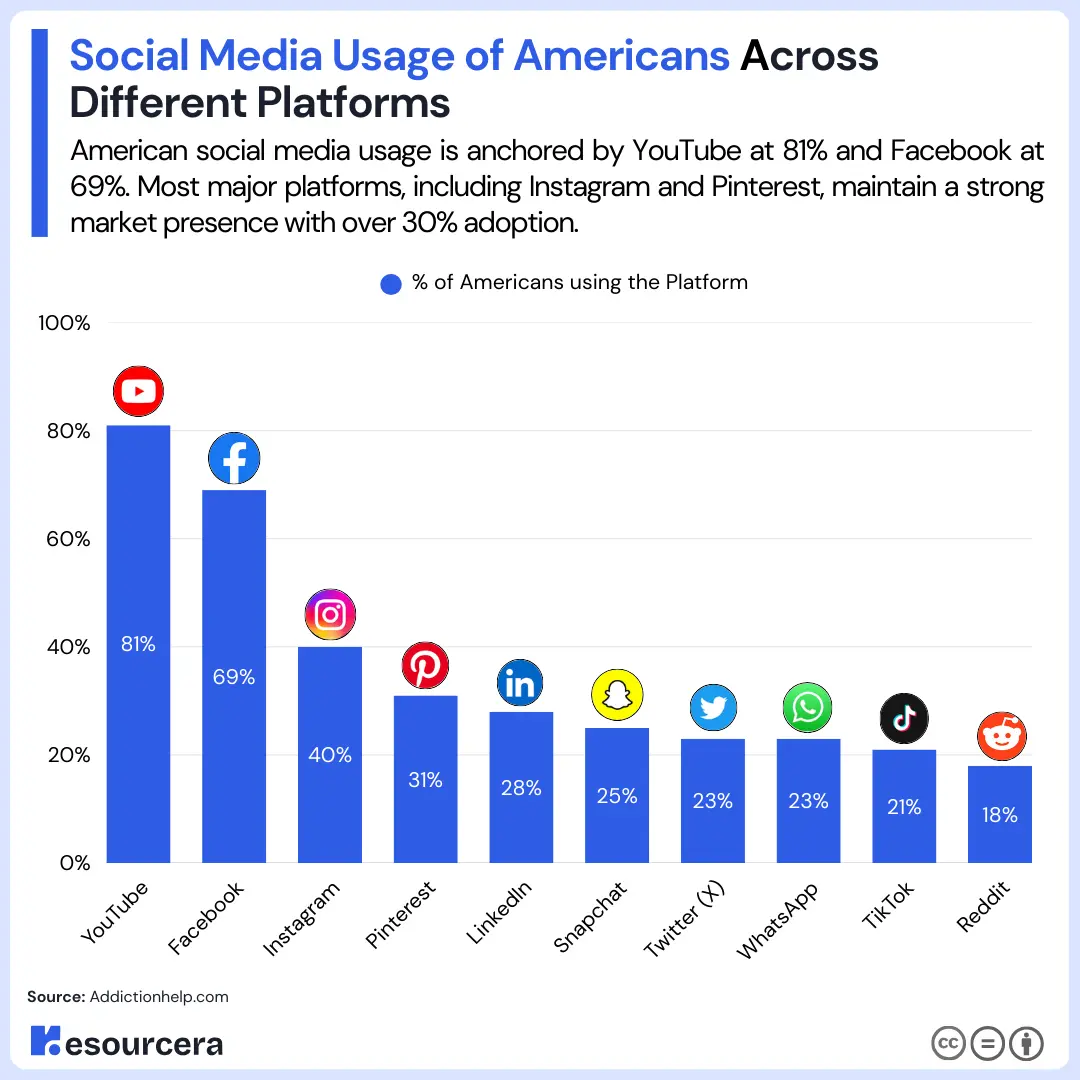
The following table represents the social media usage of Americans across different platforms.
| Social Media Platform | % of Americans using the Platform |
|---|---|
| YouTube | 81% |
| 69% | |
| 40% | |
| 31% | |
| 28% | |
| Snapchat | 25% |
| Twitter (X) | 23% |
| 23% | |
| TikTok | 21% |
| 18% |
Source: Addiction Help
The data below showcases the purpose of social media use among young users.
| Purpose os social media use | Percentage of users (Aged 16-24) |
|---|---|
| Keeping in touch with family and friends | 47.5% |
| Filling free time | 36.6% |
| Reading news stories | 34.8% |
| Searching for articles or videos | 31% |
| Looking for inspiration for activities or purchases | 27.6% |
| Searching for products to buy | 26.6% |
Demographic Analysis of Social Media Addiction
Social media addiction does not affect all population groups equally. Its prevalence and intensity vary significantly across different ages, genders, and socio-cultural backgrounds.
Here is a detailed breakdown of the demographic factors associated with social media addiction.
Social Media Addiction by Age and Generation
Young generations who have grown up with smartphones and social networking platforms tend to show higher levels of engagement and addictive behavior as compared to older age groups.
Individuals aged 18-22 years show the highest risk of social media addiction, with 40% reporting addictive use, driven by heavy daily engagement, strong peer influence, and fear of missing out (FOMO).
Adults aged 55-64 years report a lower risk of social media addiction, with 21% indicating addictive use. Their engagement is mainly limited to communication and news consumption.
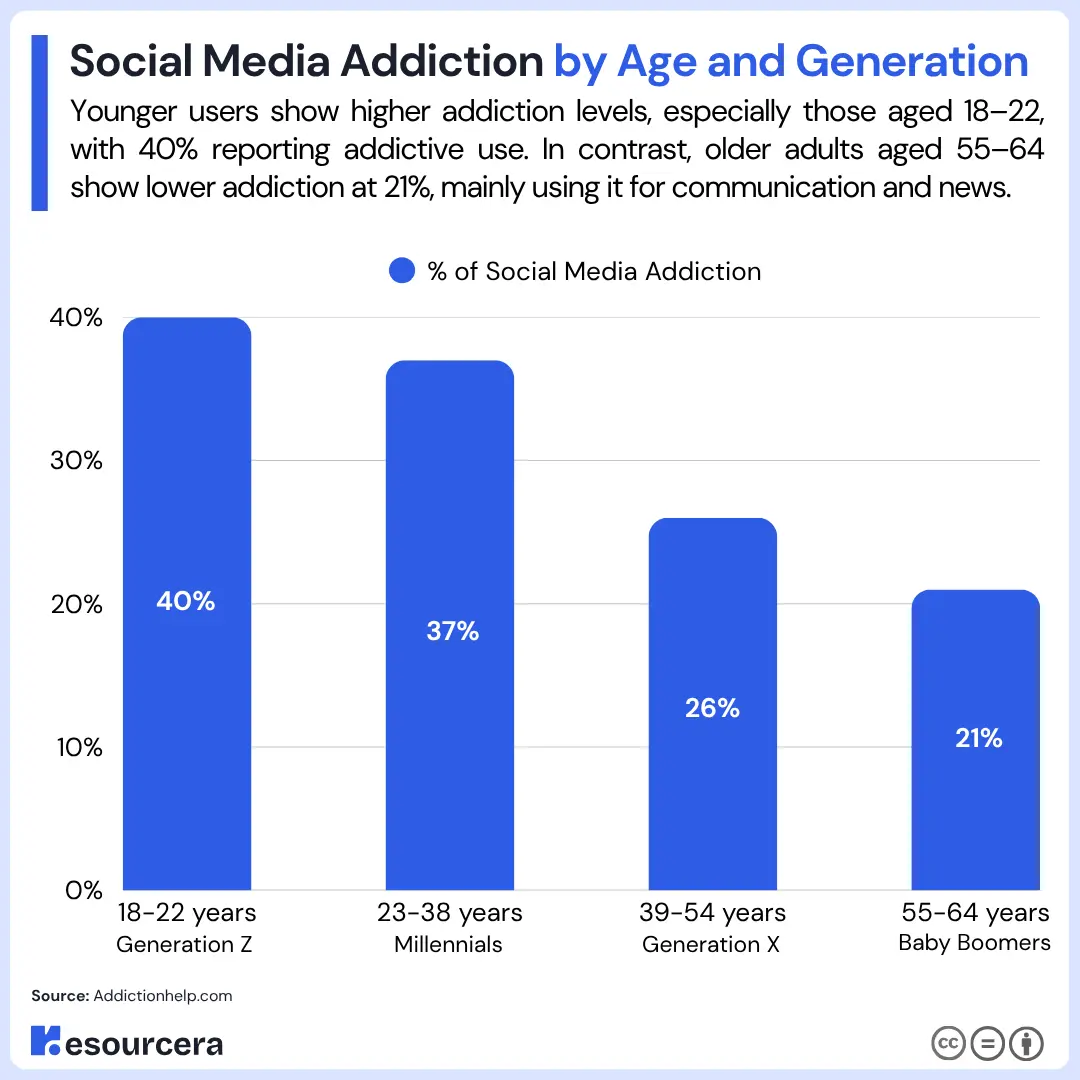
Below is a quick overview of social media addiction across different age groups.
| Age Groups | Generation | % of Social Media Addiction | Major Reasons |
|---|---|---|---|
| 18-22 years | Generation Z | 40% | Heavy daily use and FOMO |
| 23-38 years | Millennials | 37% | High social and work-related use |
| 39-54 years | Generation X | 26% | Purpose-driven, limited use |
| 55-64 years | Baby Boomers | 21% | Communication and News |
Source: Addiction Help
Research and self-reported data show that a significant proportion of Gen Z users experience addictive social media behaviors, including compulsive thinking, prolonged screen time, etc.
One of the strongest contributors to social media addiction in Gen Z is constant digital connectivity, often switching between multiple platforms like TikTok, Snapchat, and YouTube.
Social Media Addiction by Gender
About 32% of women and 6% of men are addicted to social media, highlighting a significant disparity in digital dependency between genders.
Women are more likely to report the signs of social media addiction, especially on visual and interactive platforms like Instagram, Snapchat, Pinterest, and Facebook.
Men, on the other hand, are more likely to show addictive patterns on platforms such as YouTube, Reddit, Twitter, and gaming-linked social communities.
Social Media Addiction by Race
Social media addiction varies across different racial groups in the U.S., with White users reporting the highest rate, i.e., 32%, and Hispanics with 29%.
Below is the detailed breakdown of social media addiction by race.
| Race/Ethnicity | % Addicted to Social Media |
|---|---|
| White Americans | 32% |
| Black Americans | 25% |
| Hispanic Americans | 29% |
| Asian Americans | 27% |
Source: Addiction Help
Among White Americans, YouTube is the most commonly used social media platform, with 79% of users engaging with it, followed by Facebook at 67%, Instagram at 35%, and LinkedIn at 29%.
For Black Americans, social media engagement is especially high on YouTube, which is used by 84% of users. Facebook follows closely at 74%, while Instagram reaches 49%, indicating strong engagement with visual and community-driven content.
Social Media Addiction Among Teens and Students
Social media addiction is a growing concern among teens and students, as this age group spends a significant portion of their daily time on digital platforms.
According to a report from the World Health Organization, 11% of adolescents show unhealthy social media habits, finding it difficult to limit their use.
Girls report a higher level of problematic social media use than boys, with 13% of girls affected as compared to 9% of the boys.
Peer influence and social pressure play a major role in sustaining addictive behavior. Teens and students often feel compelled to stay active online to maintain friendships, follow trends, and gain social approval through likes, comments, and followers.
More than one-third of the teenagers, i.e., 36%, stay constantly connected with friends online, with the highest rate among 15-year-old girls.
Along with social media platforms, digital gaming has also become a major part of adolescents’ daily screen time. Nearly one in three adolescents,i.e., 34% play digital games every day.
The extended screen exposure may increase the risk of addictive behavior, reduce physical activities, and have negative impacts on the sleep and academic performance of the students.
Behavioral and Usage Trends in Social Media Addiction
Social media addiction is not just about how much time people spend online; it’s about how they use the platform and how that use affects their behavior and well-being.
Below are some of the fascinating stats and facts associated with behavioral and usage trends in social media addiction.
Frequent and compulsive checking
- Habitual checking is widespread, with 72% of users checking social media within 10 minutes of waking up and 50% checking it multiple times per hour.
- Nearly 30% of young people feel anxious or restless when unable to access social media, indicating an addictive usage pattern.
Multiple Platform Engagement
Multiplatform use is common, with 60% to 70% of users active on different social media platforms daily, and over 40% of teens using five or more apps regularly.
Notifications and Interruptions
80% of social media users feel that notifications disrupt their daily focus. Up to 40% of users check their phones within minutes of receiving the notifications.
Multitasking and reduced attention span
Around 70% of the students use social media while studying, which often leads to frequent distractions.
Impact of Social Media Addiction
An internal Facebook survey revealed that one in eight users believes that their use of the platform negatively affects their sleep, work, relationships, or parenting. This means roughly 12.5% of Facebook users are affected by these impacts.
Followed by Facebook, Instagram, one of the most preferred social media platforms, has been associated with various mental health issues, such as anxiety, low self-esteem, etc. The following are some of the crucial impacts associated with social media addiction.
Physical Health Concerns
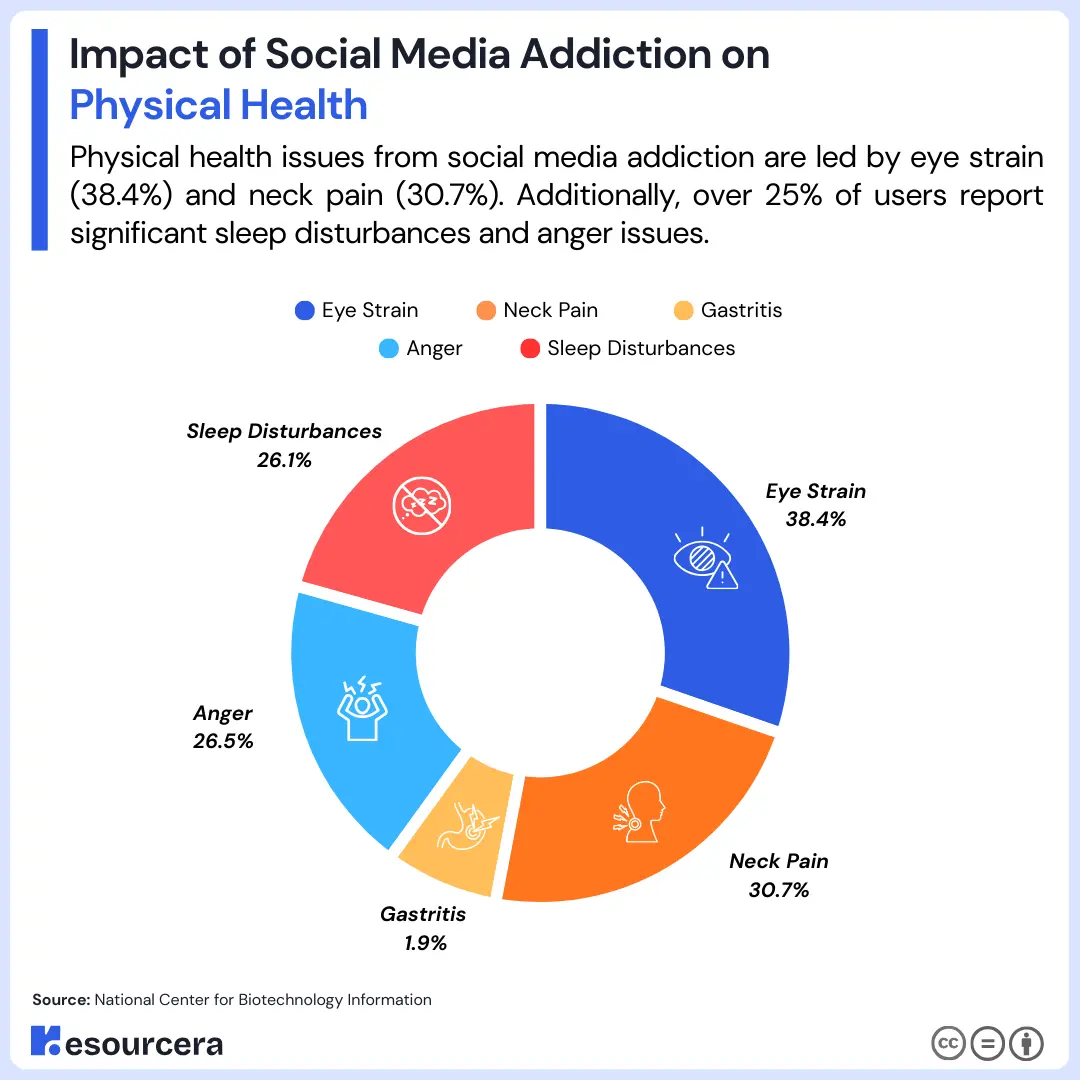
Prolonged screen time increases the likelihood of eye strain, headaches, and poor posture. Spending long hours online leads to less physical activity, which can increase the risk of obesity and other health problems.
| Physical Health issues | Percentage |
|---|---|
| Eye Strain | 38.4% |
| Neck Pain | 30.7% |
| Gastritis | 1.9% |
| Anger | 25.5% |
| Sleep Disturbances | 26.1% |
Source: National Center for Biotechnology Information
Mental Health Effects
Excessive use of social media can increase anxiety and depression, especially among teens and young adults.
The addictive nature of social media triggers the brain’s reward system, releasing dopamine that makes using social media feel pleasurable.
About 25.5% of social media users suffer from irritability and anger issues, and 26.1% of them reported sleep disturbances.
Social and Interpersonal Effects
Social media can negatively affect real-life relationships and social skills, as excessive time spent online often reduces face-to-face interactions, making it harder for individuals to build and maintain meaningful personal connections.
Around 44% of users reported that social media has a negative effect on their close relationships.
Effects of the COVID-19 Pandemic on Social Media Usage and Addiction
The COVID-19 pandemic drastically changed people’s daily routines, leading to an increase in social media use and, therefore, heightened the risk of addiction.
During the pandemic, internet usage rose among both genders, increasing from 84.7% to 87.7% for men and from 73.3% to 77.5% for women.
At the time of the COVID-19 pandemic, about 70.8% of students reported that they spent more time on social media each day as compared to before the pandemic.
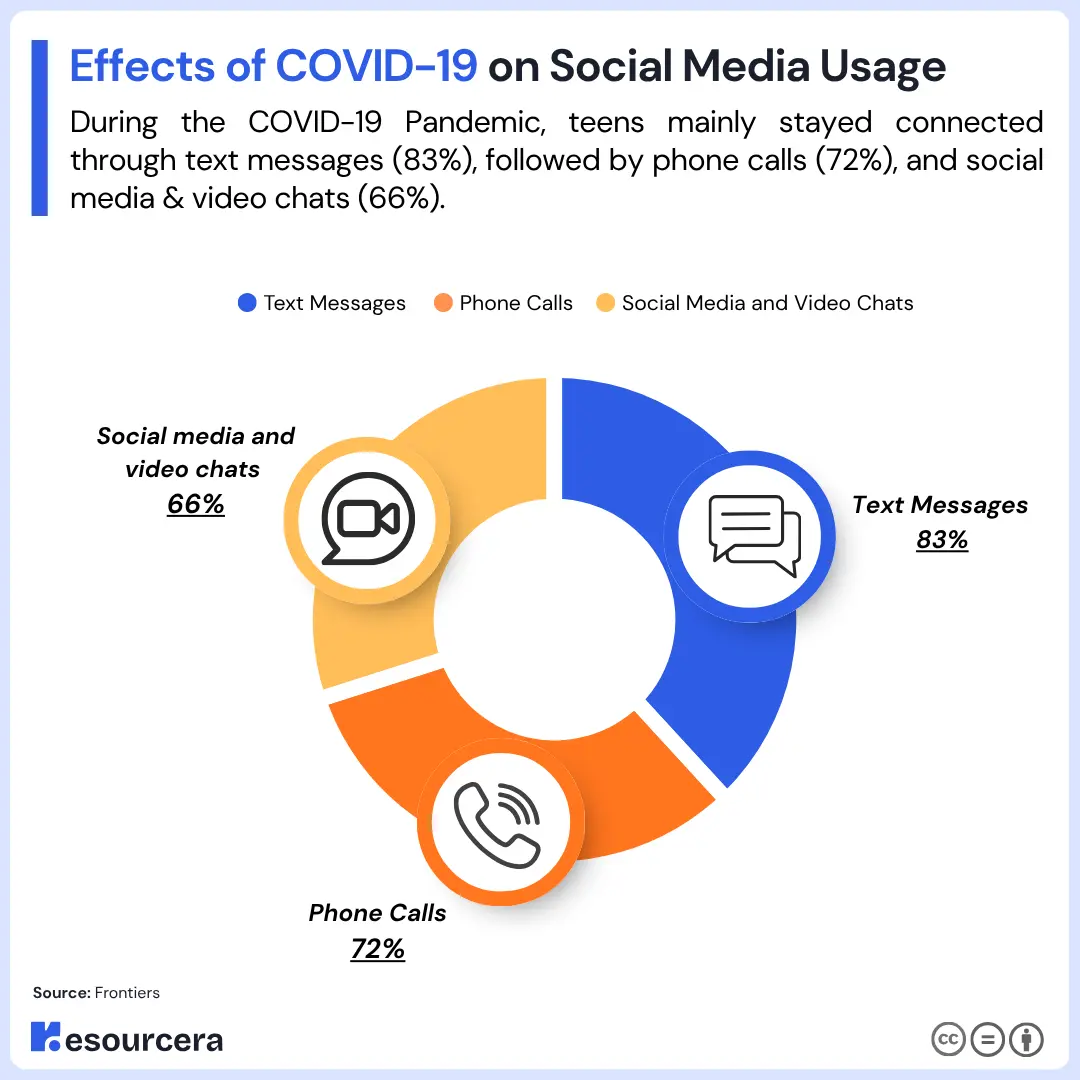
To cope with isolation during lockdown, most of the teens stayed connected through different communication means as follows.
| Communication Means | % of usage |
|---|---|
| Text Messages | 83% |
| Phone Calls | 72% |
| Social media and video chats | 66% |
Source: Frontiers