

Artificial intelligence is quietly changing the way healthcare works, everything from how diseases are detected to how patients are treated.
The global AI in healthcare market was just $1.2 billion in 2016. Today, it has grown to $56 billion in 2026. And by 2033, it is expected to hit $505.59 billion, that’s a 400x jump in just 17 years.
In the United States alone, the market is on track to grow from $14 billion in 2023 to over $300 billion by 2034, driven by 38% CAGR.
But numbers only tell part of the story. Behind this growth is a shift in how hospitals, doctors, and patients are starting to think about AI. Well, some with excitement, some with caution.
In this post, you will get to know the most influential statistics regarding the use and adoption of AI in the healthcare sector, patient opinions, and trends that are making an impact in 2026.
Top AI Healthcare Statistics (2026 Insights)
- The AI in healthcare market is valued at $56 billion in 2026.
- 80% of Americans believe AI in healthcare can improve care quality, reduce costs, and increase accessibility.
- 75% of leading healthcare companies are testing or planning to expand the use of AI across operations.
- 64% of patients are ready to use AI-powered virtual nurse assistants.
- AI-powered diagnoses could reduce treatment costs by 50% and improve health outcomes by 40%
- 83% of US consumers are concerned AI might make mistakes, and 86% worry about transparency.
AI Healthcare Market Statistics (2016 to 2033)
The global AI in healthcare market is projected to grow from about $46 billion in 2025 to nearly $505.59 billion by 2033. This represents an annual growth rate of approximately 35%.
In 2024, the market was estimated at $32.3 billion, underscoring how rapidly this sector is expanding.
The market picked up momentum in 2022, reaching around $12–15 billion.
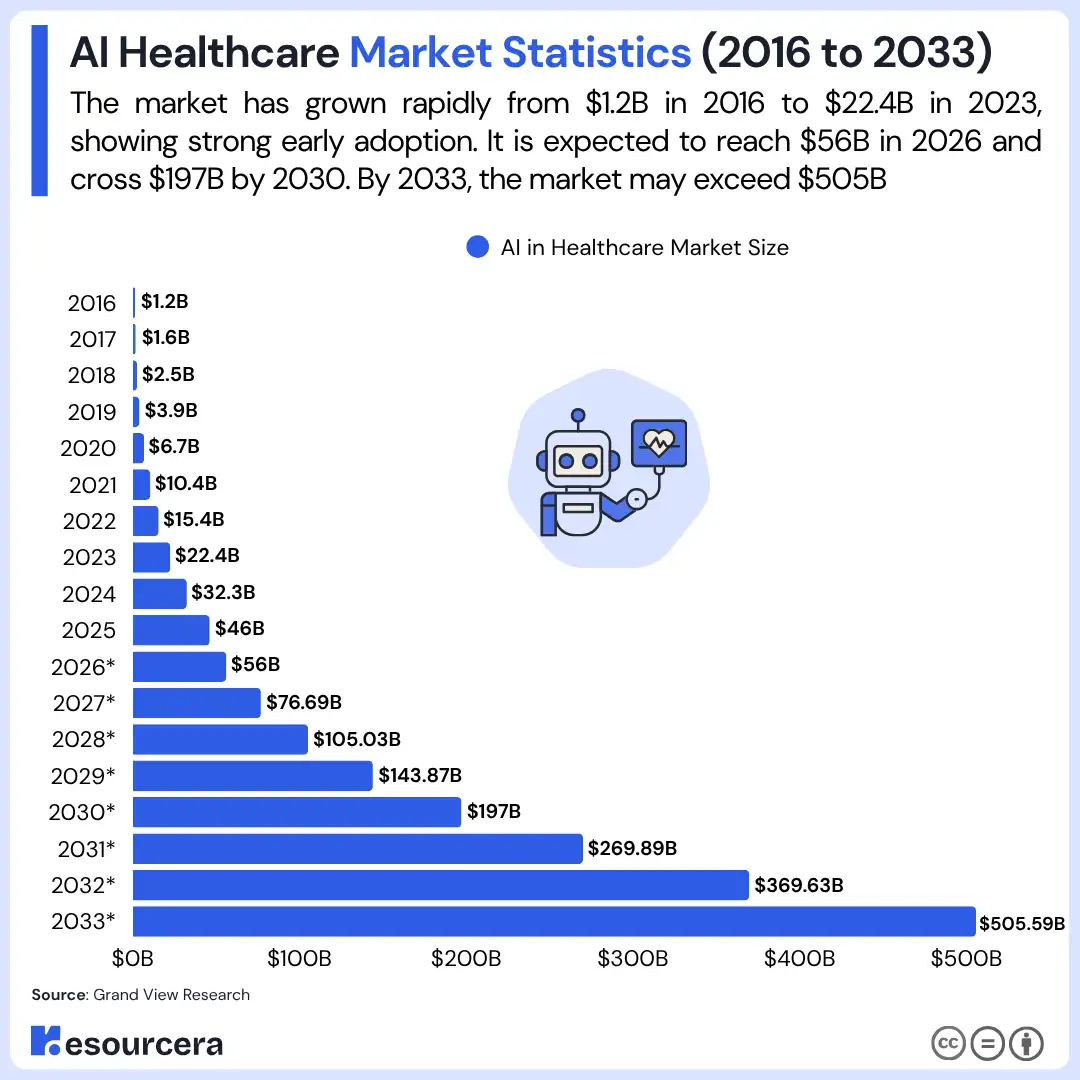
Here is a clear table showing the Global AI in Healthcare Market from 2016 to 2033:
| Year | AI in Healthcare Market Size |
|---|---|
| 2016 | $1.2 billion |
| 2017 | $1.6 billion |
| 2018 | $2.5 billion |
| 2019 | $3.9 billion |
| 2020 | $6.7 billion |
| 2021 | $10.4 billion |
| 2022 | $15.4 billion |
| 2023 | $22.4 billion |
| 2024 | $32.3 billion |
| 2025 | $46 billion |
| 2026* | $56 billion |
| 2027* | $76.69 billion |
| 2028* | $105.03 billion |
| 2029* | $143.87 billion |
| 2030* | $197 billion |
| 2031* | $269.89 billion |
| 2032* | $369.63 billion |
| 2033* | $505.59 billion |
AI In Healthcare Market Size In The US
As of 2026, the AI in healthcare market in the United States is valued at $36 billion and is projected to increase to nearly $300 billion by 2033.
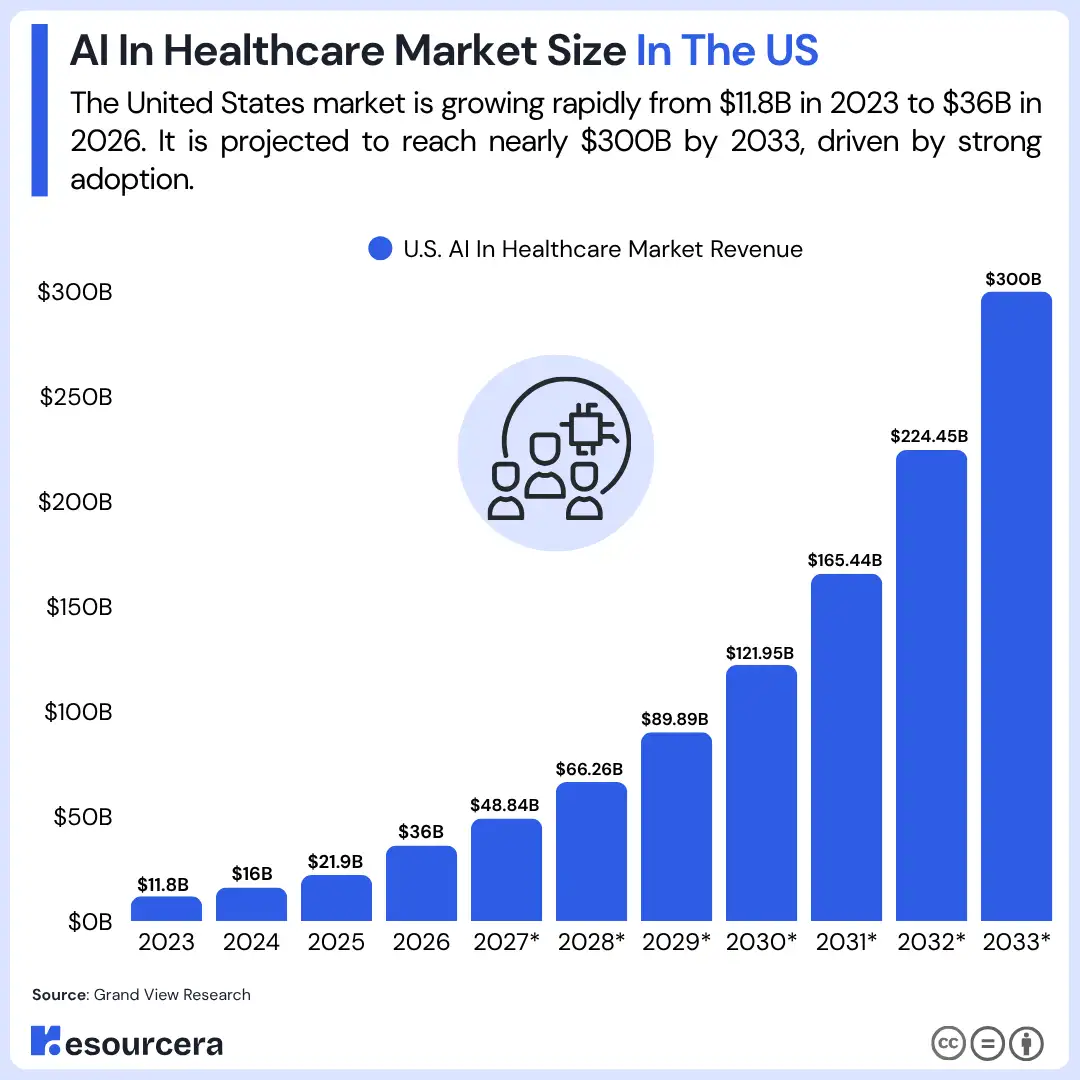
The US AI in healthcare market is forecast to expand at a strong CAGR of 38% between 2024 and 2033.
| Year | U.S. AI In Healthcare Market Revenue |
|---|---|
| 2023 | $11.8 billion |
| 2024 | $16 billion |
| 2025 | $21.9 billion |
| 2026 | $36 billion |
| 2027* | $48.84 billion |
| 2028* | $66.26 billion |
| 2029* | $89.89 billion |
| 2030* | $121.95 billion |
| 2031* | $165.44 billion |
| 2032* | $224.45 billion |
| 2033* | $300 billion |
Source: Grand View Research 1
AI in Healthcare Market Size In Different World Regions
The North American AI in healthcare market was valued at $14.57 billion in 2025 and is projected to grow rapidly at a CAGR of 36.3% from 2024 to 2030.
The European AI in healthcare market reached $5.24 billion in 2025 and is expected to expand at a CAGR of 40.5% between 2024 and 2030.
The UK AI in healthcare market was valued at $1.66 billion in 2025 and is projected to reach $12.49 billion by 2030, growing at a remarkable CAGR of 39.8% from 2024 to 2030.
Meanwhile, the Asia Pacific region showed a revenue of $5.8 billion in 2025 and is expected to grow at a 41.2% CAGR between 2024 and 2030.
The AI in healthcare market in Australia generated a revenue of $248 million in 2025 and is projected to reach $1.9 billion by 2030.
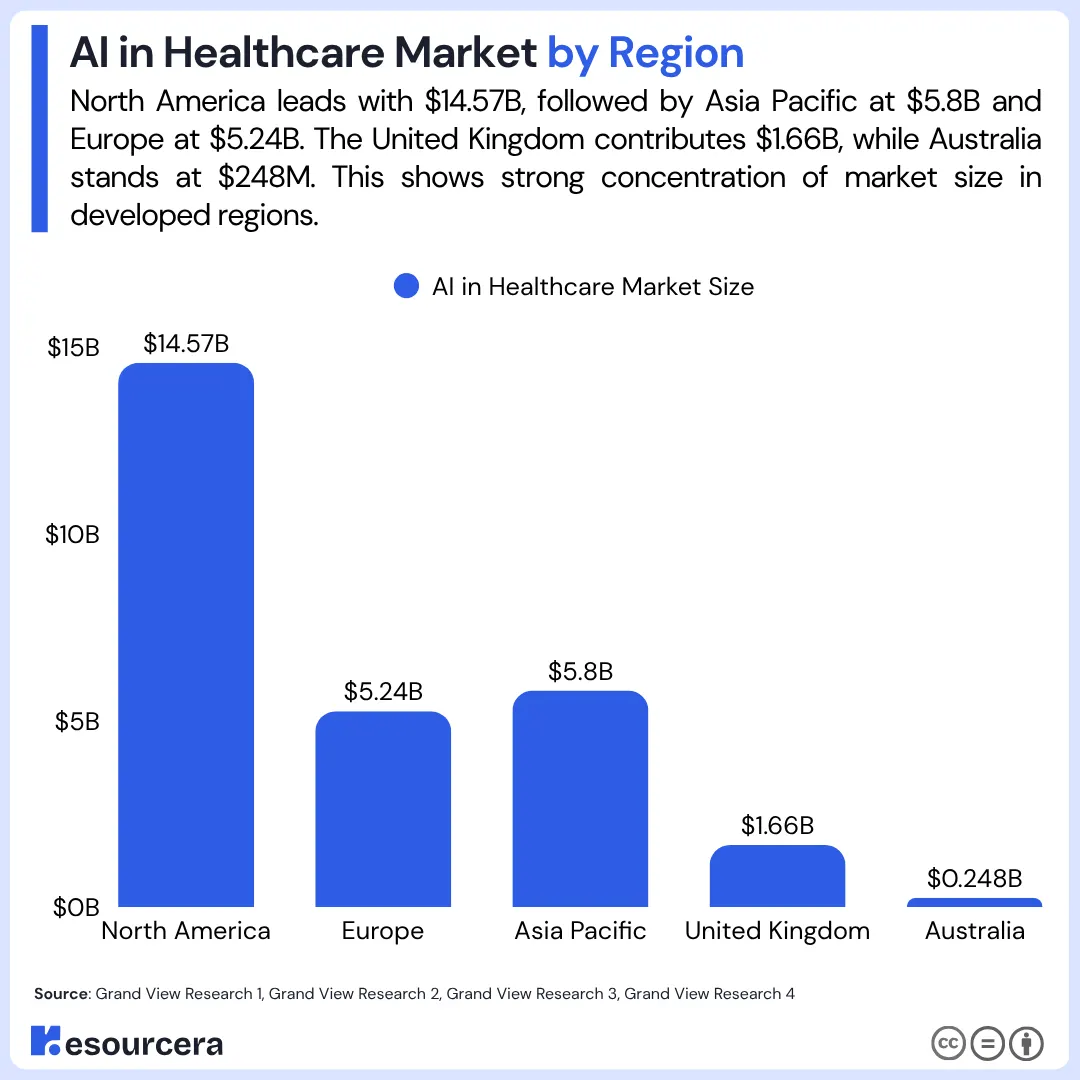
Let’s look at these numbers in a simple table:
| Region | AI in Healthcare Market Size |
|---|---|
| North America | $14.57 billion |
| Europe | $5.24 billion |
| Asia Pacific | $5.8 billion |
| United Kingdom | $1.66 billion |
| Australia | $248 million |
Sources: Grand View Research 1, Grand View Research 2, Grand View Research 3, Grand View Research 4
AI in Healthcare Adoption & Trust Statistics
Eight in ten Americans believe AI can improve healthcare quality, reduce costs, and make care more accessible. About 60% of healthcare leaders using generative AI are already seeing a positive return on investment or expect to see one.
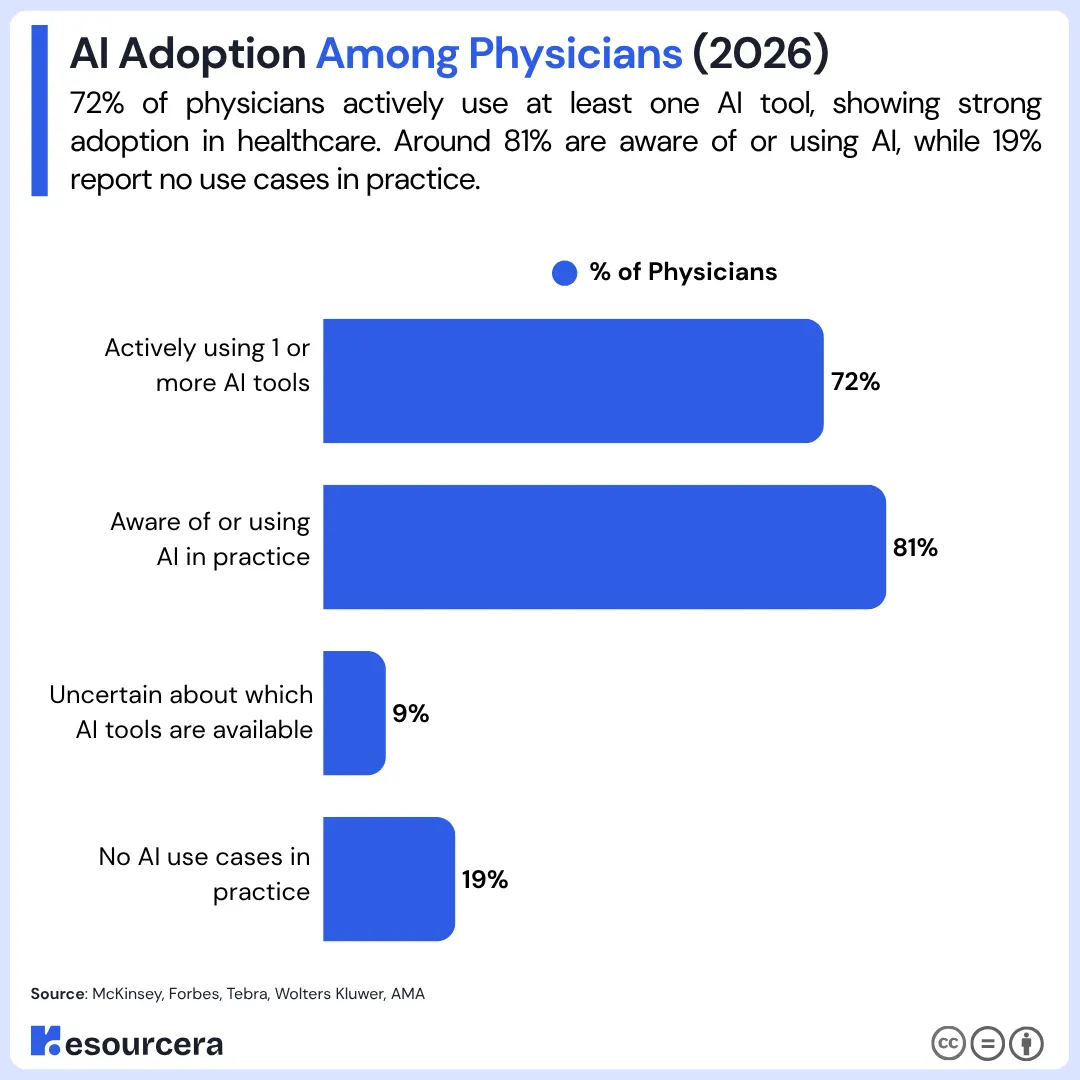
72% of physicians reported actively incorporating at least one AI tool into their practice in 2026. In practical terms, that means 4 out of every 5 doctors today work in an environment where AI has some presence.
| AI Awareness & Use in 2026 | % of Physicians |
|---|---|
| Actively using 1 or more AI tools | 72% |
| Aware of or using AI in practice | 81% |
| Uncertain about which AI tools are available | 9% |
| No AI use cases in practice | 19% |
More than half of organizations (53%) say they’ve had a high degree of success using AI for this purpose, reflecting growing confidence among AI users across industries.
A survey by the American Medical Association (AMA) asked over 1,000 physicians about their views on AI in healthcare.
81% of physicians say generative AI will improve how the care team interacts with patients. Meanwhile, around 41% of the physicians carry both excitement and concern about AI in healthcare in equal measure, highlighting mixed sentiment even among experienced AI users.
The strongest area of agreement was around diagnosis. 72% of physicians believe AI can help them make better, more accurate clinical decisions. Close behind, 69% see AI as a tool for working more efficiently. And 61% believe AI can directly improve patient outcomes.
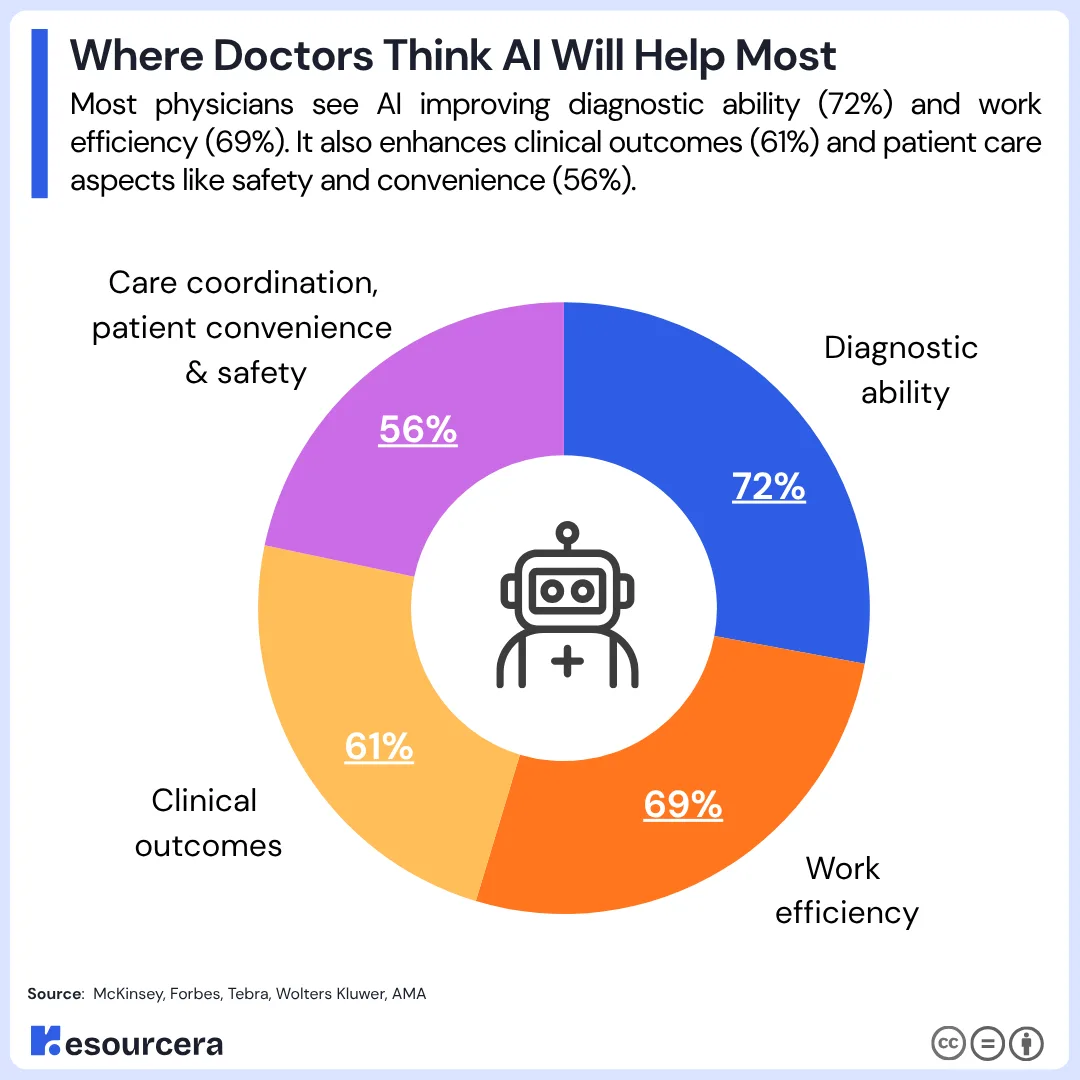
Here is how doctors see AI as a clinical and operational asset:
| Where Doctors Think AI Will Help Most | % of Physicians |
|---|---|
| Diagnostic ability | 72% |
| Work efficiency | 69% |
| Clinical outcomes | 61% |
| Care coordination, patient convenience & safety | 56% |
When asked which specific AI tools they were most excited about, they pointed to administrative relief.,
Over half (54%) were enthusiastic about AI handling documentation tasks like billing codes, medical charts, and visit notes. Nearly half (48%) wanted AI to take over the frustrating process of insurance prior authorization.
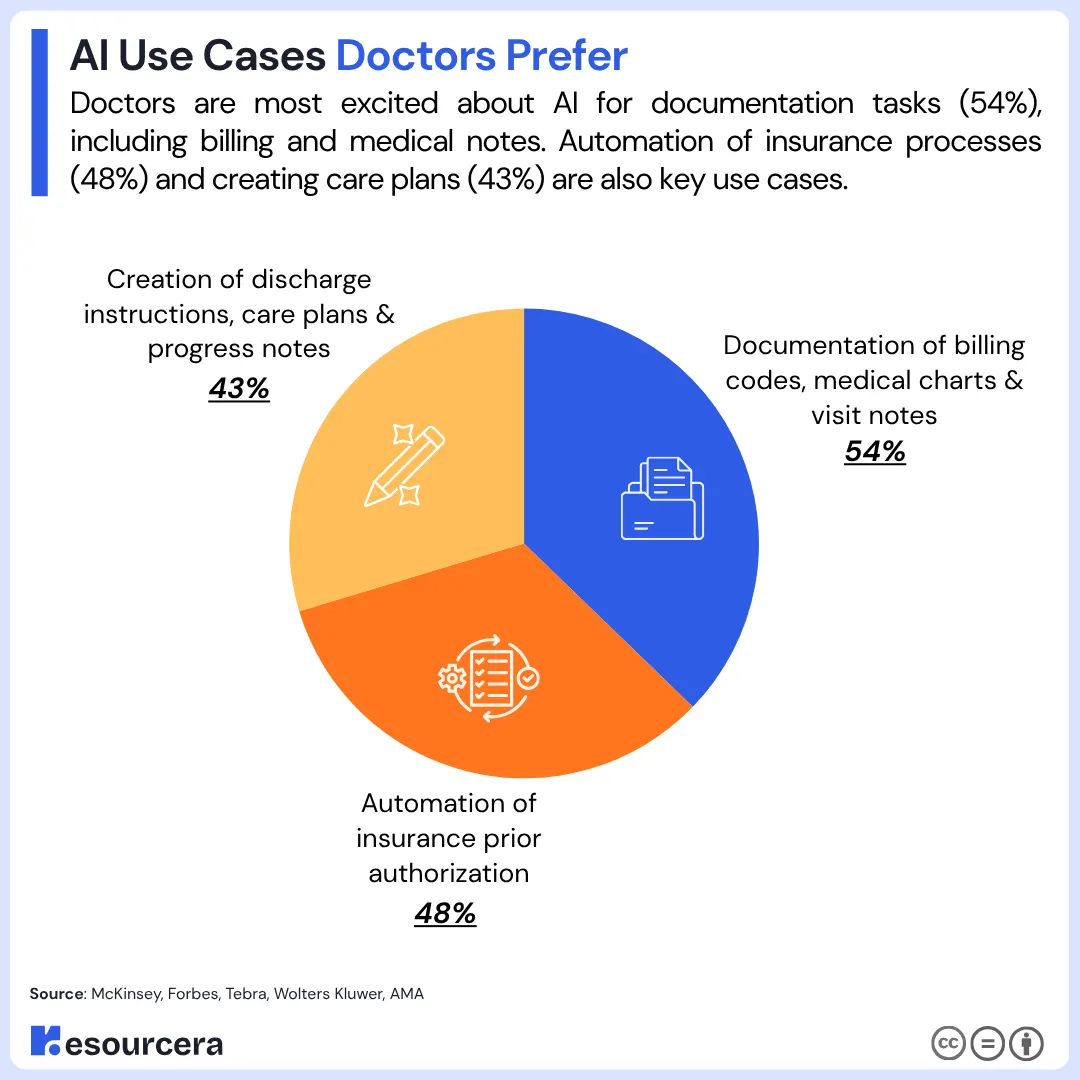
And 43% saw value in AI drafting discharge instructions, care plans, and progress notes. Take a look at how physicians are most excited about:
| AI Use Cases Doctors Are Most Excited About | % of Physicians |
|---|---|
| Documentation of billing codes, medical charts & visit notes | 54% |
| Automation of insurance prior authorization | 48% |
| Creation of discharge instructions, care plans & progress notes | 43% |
On the other hand, nearly 4 in 10 physicians (39%) are concerned that AI could weaken the doctor-patient relationship. And 41% flagged patient privacy as a significant concern, which is understandable given how sensitive medical data is.
| Key Concerns About AI in Healthcare | % of Physicians |
|---|---|
| Impact on patient privacy | 41% |
| Impact on the doctor-patient relationship | 39% |
Three in five physicians (59%) say AI can save time by summarizing patient data from electronic health records (EHRs).
AI Adoption in Clinical Documentation
The clearest win for AI in healthcare right now is clinical documentation. More than half of organizations (53%) say they’ve had a high degree of success using AI for this purpose.
This makes sense because documentation is largely a language task, and AI has proven to be quite good at handling text.
When it comes to clinical work, imaging and radiology is where AI has been deployed the most. A remarkable 9 out of 10 organizations (90%) have rolled out AI tools in this area, at least in part.
Radiologists using AI are detecting lesions 26% faster than they would without it, and are identifying nearly 30% more cases overall.
Here is a quick insight on how use of AI has impacted the clinical area:
| Clinical Area | What AI Improved | By How Much |
|---|---|---|
| Radiology | Speed of lesion detection | 26% faster |
| Radiology | Number of cases identified | ~30% more |
| Cardiac imaging | Scan recall rate | Zero recalls |
| Cardiac imaging | Patient screening capacity | 9% more patients screened |
Adoption is reasonably widespread, but only 38% of organizations say they’ve had real success with it. That means nearly two-thirds of those using these tools aren’t fully satisfied with how they’re performing.
AI Adoption in Administrative Tasks
35% of healthcare professionals say they actually spend more time on administrative tasks than they do with patients. And a further 45% say the two take up roughly equal amounts of their time.
That means only about 1 in 5 healthcare workers spend the majority of their working hours focused on patient care, which is, after all, the reason they entered the profession in the first place.
57% identified reducing administrative burdens through automation as the single most significant opportunity for AI adoption in their organization.
| Time Spent on Admin vs. Patient Care | % of Healthcare Professionals |
|---|---|
| More time on admin than patients | 35% |
| Roughly equal time on both | 45% |
| More time with patients | ~20% |
The healthcare industry has clearly recognized the scale of this problem, and investment dollars are following. In 2024, 60% of all healthcare AI investment went toward administrative applications.
| Area | Share of Healthcare AI Investment (2024) |
|---|---|
| Administrative AI | 60% |
| All other AI applications | 40% |
AI in Drug Discovery
In 2023, drug discovery was already the leading AI use case in healthcare, accounting for 28% of the entire healthcare AI market and valued at $0.9 billion. Just one year later, in 2024, that figure had nearly doubled to $1.86 billion with a compound annual growth rate of 29.9%.
As of 2025, 66% of life sciences executives report that they are actively investing in generative AI to accelerate research and drug discovery.
| Year | AI Drug Discovery Market Size | Growth |
|---|---|---|
| 2023 | $0.9 billion | — |
| 2024 | $1.86 billion | ~107% year-on-year |
Sources: McKinsey, Forbes, Wolters Kluwer,AMA
Perception of AI in Healthcare by Gender
Data from the Pew Research Center shows that women are more uncomfortable with AI in healthcare than men. 54% of men said they were very or somewhat uncomfortable, which is 12% less than women.
Overall, two-thirds of women (66%) reported being very or somewhat uncomfortable with AI’s prominent role in healthcare.
Source: Pew Research
Generative AI in Healthcare Statistics
Opinions on how fast AI is being used in healthcare differ. 41% of people think it’s too slow, 32% think it’s just right, and 27% think it’s happening too fast.
75% of top healthcare companies are testing or planning to expand Generative AI across their operations.
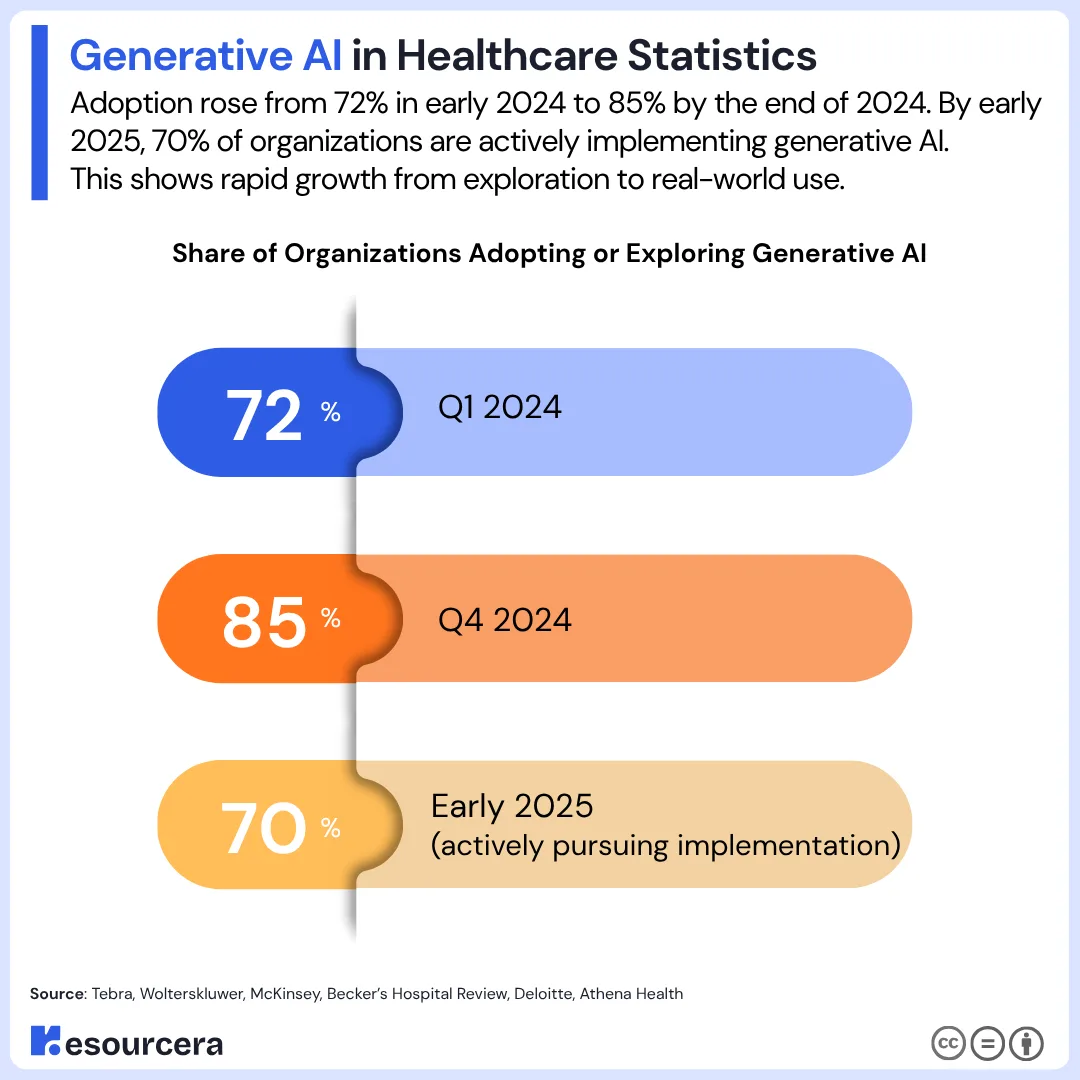
In early 2024, 72% of healthcare organizations had either adopted or were exploring generative AI. By the end of that same year, that figure had climbed to 85%. And as of early 2025, 70% of healthcare payers and providers are actively working to put generative AI into practice.
| Timeframe | Share of Organizations Adopting or Exploring Generative AI |
|---|---|
| Q1 2024 | 72% |
| Q4 2024 | 85% |
| Early 2025 | 70% actively pursuing implementation |
40% of U.S. doctors are ready to use generative AI with patients this year at the point of care. At the same time, over 10% of US healthcare professionals currently use AI, and almost 50% plan to use it in the future.
Meanwhile, 42% of physicians think AI will be just another factor making healthcare more complicated. 40% of physicians feel AI is overhyped and may not live up to expectations.
One of the most interesting questions in healthcare AI right now is not just whether to use it, but how to build it.
In 2024, most healthcare organizations leaned heavily on outside vendors to get their AI programs off the ground. Third-party vendor reliance grew slightly from 59% in Q1 2024 to 61% by Q1 2025, while in-house development held steady at around 20%, and off-the-shelf tools accounted for about 19%.
| AI Development Approach | Q1 2024 | Q1 2025 |
|---|---|---|
| Third-party vendors | 59% | 61% |
| In-house development | 20% | ~20% |
| Off-the-shelf tools | 19% | ~19% |
Sources: Tebra, Wolterskluwer, Becker’s Hospital Review, Deloitte, Athena Health
Patient and Public Opinions on AI in Healthcare
64% of patients would feel comfortable using AI-powered virtual nurse assistants. Additionally, one in five consumers who used generative AI for health and wellness did so to learn about medical conditions.
In 2024, surveys across the United States revealed a public that was aware of AI’s potential but far from fully comfortable with it. In fact, 8 in 10 Americans acknowledged that AI has the potential to improve the quality of care and bring down healthcare costs.
But despite recognizing AI’s potential, 60% of Americans said they felt uneasy about the idea of AI being used to diagnose or treat them directly.
By 2026, the mood has shifted. In 2026, 59% of patients now believe AI can genuinely improve healthcare. And an even larger share, 73%, say they would welcome more technology in their care.
| Patient Sentiment on AI in Healthcare (2026) | % of Patients |
|---|---|
| Believe AI can improve healthcare | 59% |
| Welcome more technology if it enhances their care | 73% |
| Concerned AI could reduce time with doctors | 52% |
One in four Americans said they would not visit a healthcare provider who refuses to use AI technology. Moreover, one in four Americans is more likely to use an AI chatbot than go to therapy.
38% of Americans believe AI will improve healthcare outcomes, 33% think it will make outcomes worse, and 27% feel it will make no difference.
Sources: Deloitte 2, Syneos Health Communications
AI Healthcare Challenges & Barriers Statistics
Three main barriers are slowing down broader AI adoption in healthcare:
The biggest obstacle, cited by 77% of respondents, is that the AI tools themselves aren’t mature enough yet. In other words, the technology still has too many gaps and limitations to be fully trusted in high-stakes medical settings.
Financial concerns came in second, flagged by 47% of organizations. Many healthcare providers are still trying to figure out whether the investment is worth it.
Finally, 40% pointed to regulatory uncertainty. The rules and guidelines around how AI can and should be used in healthcare are still being worked out, and that lack of clarity makes many organizations hesitant to move fast.
| Barrier | % of organizations citing it |
|---|---|
| Immature/unreliable AI tools | 77% |
| Financial concerns | 47% |
| Regulatory uncertainty | 40% |
86% of Americans worry that generative AI lacks transparency regarding where information comes from and how it is validated, while 89% of physicians want vendors to clearly disclose sources, creators, and data origins.
Similarly, 82% of the US consumers are concerned that AI may rely on unfiltered internet information.
Also, 80% of Americans feel that a lack of understanding and evidence of improved health outcomes is a significant risk for adopting AI in healthcare.
Despite these advancements, 53% of Americans believe AI cannot replace the experience of human health experts, and 43% still prefer human interaction and touch in their care.
Sources: PSNet, Wolters Kluwer 2, Medtronic
AI Spending and ROI in Healthcare
In the first half of 2025 alone, venture funding in digital health reached $6.4 billion, slightly ahead of the $6 billion raised during the same period in 2024.
For 60% of healthcare organizations, AI budgets are growing faster than their overall IT budgets. That means AI is not just getting a slice of existing technology spending.
At the top of the decision-making chain, senior executives (the C-suite) are making 70% of AI use case decisions.
| Year | Venture Funding |
|---|---|
| H1 2024 | $6.0 billion |
| H1 2025 | $6.4 billion |
When it comes to return on investment, 52% report a moderate return on their AI investment. A further 30% report high or very high returns, suggesting that for nearly a third of organizations, AI is already delivering significant financial benefits. Only 18% report low, break-even, or negative returns.
Perhaps the most striking finding is that 45% of organizations using generative AI achieved a measurable return within just 12 months.
| ROI Level Reported | % of Organizations |
|---|---|
| High or very high ROI | 30% |
| Moderate ROI | 52% |
| Low, break-even, or negative ROI | 18% |
Source: Ventionteams
The Future Of Healthcare In AI: Trends For 2026
Healthcare is now leading generative AI adoption, with $500 million in enterprise spending, signaling a significant shift from traditional slow adoption.
In Q4 2025, 87% of healthcare leaders from payers, health systems, and healthcare services and technology groups reported exploring or having already adopted generative AI capabilities.
AI enables healthcare leaders to shift their focus from data aggregation to deriving actionable insights, thereby improving decision-making and patient outcomes.
In addition, experts emphasize the importance of ensuring that AI tools serve all populations fairly, highlighting the responsibility of developers and administrators in this regard.
Sources: Menlo Ventures, HIMSS, Harvard Medical School

