

Back in March, one team landed a data story for a logistics client in a trade publication they had chased for years. 6 weeks passed before Google’s AI Overview pulled that exact piece to answer a mid-size shipper’s freight question, leaving their 2 national placements invisible. Ghosts, basically.
They did 46 pitches, got 9 replies, achieved 3 placements, burned 31 hours, and got one citation that actually moved the needle. Honestly, according to the analysts, that lopsided return is why they started tearing into citation analysis tools for AI search, especially once they saw the top 20 domains hogging between 20.5% and 70.8% of citations on each platform, with every engine guarding its own shortlist.
That team thinks most digital PR teams should grab SE Visible by SE Ranking first. Its Sources view maps out the domains and URLs each engine pulls for your client’s prompts, flags which client pages earn citations, and exposes the outlets engines trust when they recommend a competitor instead.
What they weighted:
- Cited domains and URLs broken down by engine
- Sources citing competitors while ignoring your client
- Source categories: publications, reviews, forums, video
- Repeatable tracking across weeks instead of a one-off snapshot
- Clean exports or an API that feeds straight into the pitch list
During October 2026, they audited vendor pages and ranked 8 AI citation analysis tools by how fast they turn citations into media targets.
What Do Citation Analysis Tools for AI Search Actually Show a PR Team?
Citation analysis tools for AI search, often called AI citation tools, log which domains and URLs engines pull for a tracked prompt set across time. For a PR crew, that log is pure gold because they get a ranked hit list of sources to pitch.
Earning a citation means shaping the answer, not just scoring a link, and the cited page might never mention your client by name. According to open data, news outlets barely cracked the 25 most-cited domains, and 59.1% of cited domains showed up only once. AI search monitoring tools dig up that long tail of review sites, rowdy forums, and trade titles.
Leading Citation Analysis Tools for AI Search, Compared
Below, 8 citation analysis tools for AI search sit side by side. They are judged strictly on what builds a sharper pitch list:
- Cited domains and URLs
- Pitch signal
- Source types
- Tracked engines
- Entry price
The list below will help you choose the best AI search monitoring tool for your needs.
| Platform | Citation view | Pitch-list signal | Source types | Engines named by vendor | Entry price |
|---|---|---|---|---|---|
| SE Visible by SE Ranking | Cited domains and URLs, by engine | Not-mentioned filter; competitor-cited sources | Media, blogs, forums; By type filter | Gemini, AI Mode, AI Overviews, ChatGPT, Perplexity | Basic plan starts at $89/mo or $79/mo billed annually |
| Evertune | Every cited domain and URL, relevance-scored | Opportunity URLs, Pro and above | Owned, Strength, and Opportunity URLs | ChatGPT, Claude, Gemini, AI Overview, AI Mode, Perplexity, Copilot, DeepSeek, Meta | Starter $60/mo, billed annually |
| Scrunch | Most-cited domains and URLs, trend per URL | Placements via partners Noble and Stacker | Third-party, competitors, social, custom segments | Core: ChatGPT, Perplexity, AI Overviews, Copilot | Core $250/mo; billing basis not stated |
| Promptwatch | Citation Analytics, compared model by model | Cited pages without you, plus outreach drafts | Reddit threads and YouTube videos | ChatGPT, Perplexity, AI Overviews, Copilot | Essential $95/mo; 7-day trial |
| Otterly.AI | Link Citations Analysis, Domain Ranking, every plan | Third-party sites to pursue for coverage | Earned media, Reddit, Wikipedia, social | ChatGPT, AI Overviews, Perplexity, Copilot; more as add-ons | Lite $29/mo; 15% off annually |
| Rankscale | Domains and URLs in AI source boxes | Sources cited for you and competitors | Not stated on its public pages | Google AI Overviews, AI Mode, ChatGPT, Perplexity, Muse Spark, Gemini, Claude, Copilot, and DeepSeek | Essentials $17/mo yearly; Pro $99/mo |
| ZipTie | Cited domains, URLs, and the prompts behind them | Competitors view ranks domains by citation share | Reddit, YouTube, community via UGC add-on | Seven, incl. ChatGPT, Perplexity, Gemini, Copilot | Starter preset from $42.75/mo |
| Am I Cited | Citation rank, provider matrix, exact thread URLs | Review and comparison sources models trust | Reddit, YouTube, Quora, niche forums | ChatGPT, Perplexity, Gemini, Claude, Copilot, AI Overviews | Starter EUR 50/mo; trial needs card |
8 Citation Analysis Tools for AI Search, Ranked for PR Teams
We think SE Visible grabs the top spot because it maps cited domains by engine and stacks them right up against your competitors. The other 7 citation analysis tools for AI search? Honestly, they just do narrower gigs.
1. SE Visible
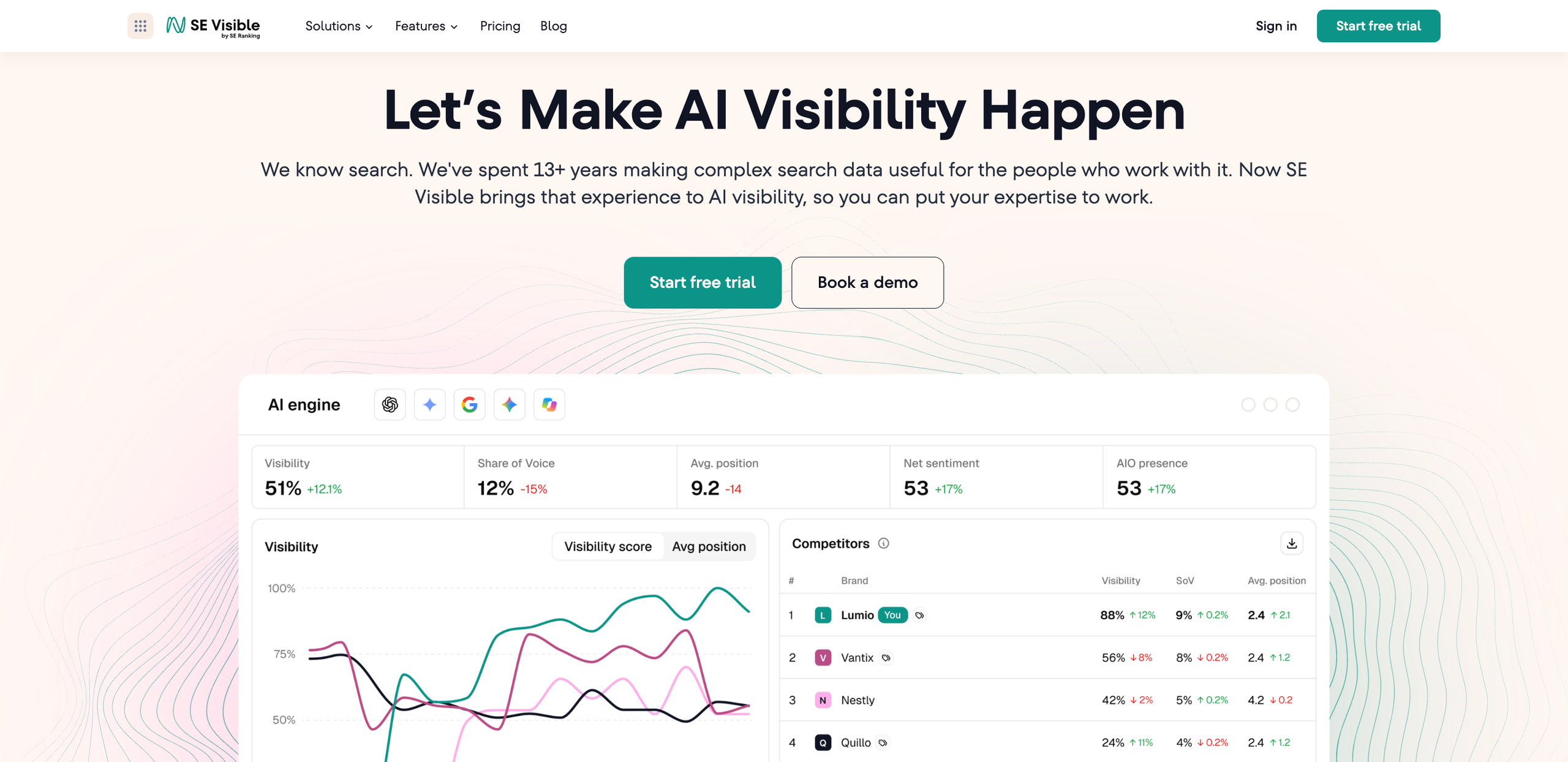
We think SE Visible by SE Ranking is the smartest starting line for digital PR crews because its Sources view maps the exact domains and URLs cited across ChatGPT, Gemini, Google AI Mode, and AI Overviews. Pure pitch fuel. It flags which of your client’s pages already earn citations, then exposes the third-party outlets engines trust whenever they plug a competitor instead. You can pull CSV exports that drop right into an outreach sheet. Unlimited user seats come standard, so the whole agency can poke around client workspaces without racking up extra license fees.
Best for: Agency PR teams and in-house comms leads who own AI visibility.
Standout feature: Open Sources allows you to get the domains and URLs each engine cited for your tracked prompts. They are grouped into media, blogs, and forums. You can set the Brand filter to show sources that leave your client out. A competitor view shows what AI cites when it names a rival.
Pros:
- Shows which client pages AI cites, prompt by prompt
- Keeps the unedited answer behind each number, with engine, market, and date
- Exports Sources columns to CSV or XLSX, with API access on all plans and Looker Studio
Cons:
- No outreach or email drafting, so pitching stays in your own PR stack
- Domain-type taxonomy and domain-level metrics in Sources are still being built
- Backlink and SEO work lives in SE Ranking
Pricing:
- Basic: $89/mo ($71/mo equivalent billed annually)
- Core: $189/mo ($151/mo equivalent billed annually)
- Agency: $399/mo ($319/mo equivalent billed annually)
Key Takeaway: SE Visible is where you should build a pitch list from what engines cite when a competitor wins the answer. Tracking runs daily by default, adjustable in project settings. You can try the competitor sources view in SE Visible on one client. For link and SEO work, its sister platform SE Ranking completes the authority picture.
2. Evertune
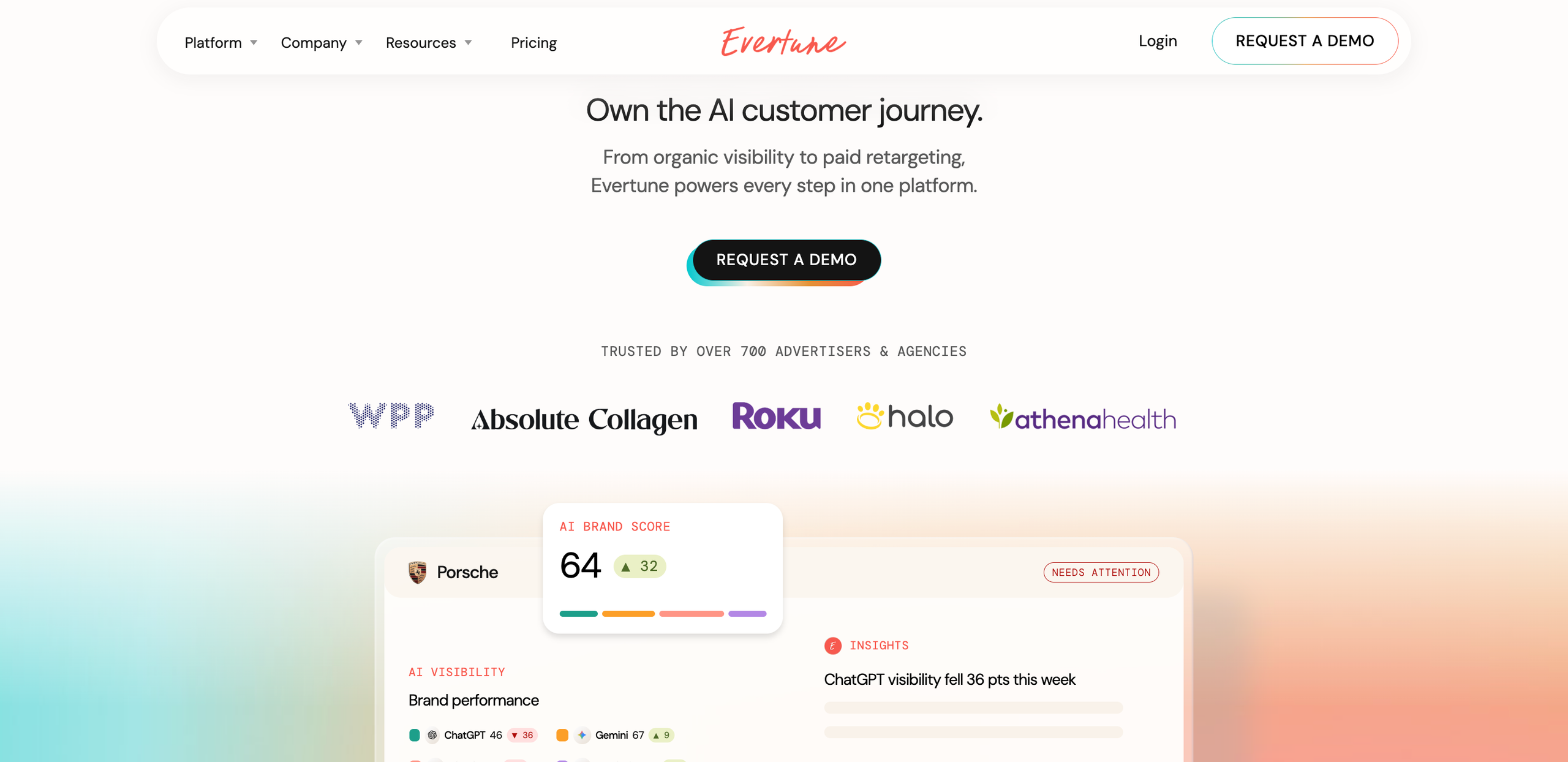
Evertune fires off thousands of prompt samples per model each month to build statistically solid data, splitting every cited source into Strength and Opportunity URLs. Those Opportunity URLs are what PR teams actually care about, since they pinpoint high-impact pages that shape AI answers without mentioning your client yet. It is pricey for a boutique shop, maybe, though unmatched when enterprise CMOs demand sampling at scale.
Best for: enterprise brand teams that want PR targets ranked by influence.
Standout feature: Opportunity URLs are high-influence pages where your brand is absent, which Evertune calls the highest-ROI targets for PR and content placement. Partner Connect shows which affiliate platforms reach those domains. Each prompt is sampled up to 100 times per model, so one odd answer doesn’t set the list.
Pros:
- Weights relevance scores by sentiment
- Monitors daily on every tier
- Adds a Data MCP from Pro
Cons:
- Opportunity URLs and Partner Connect start at Pro
- API export is Enterprise only
Pricing:
- Starter: $60/mo (billed annually)
- Pro: $800/mo (billed annually)
- Enterprise: custom
Key Takeaway: Evertune hands you a ranked target list, not a raw source dump. It saves the sorting hours. The PR team needs a Pro tier, so price your pilot there.
3. Scrunch
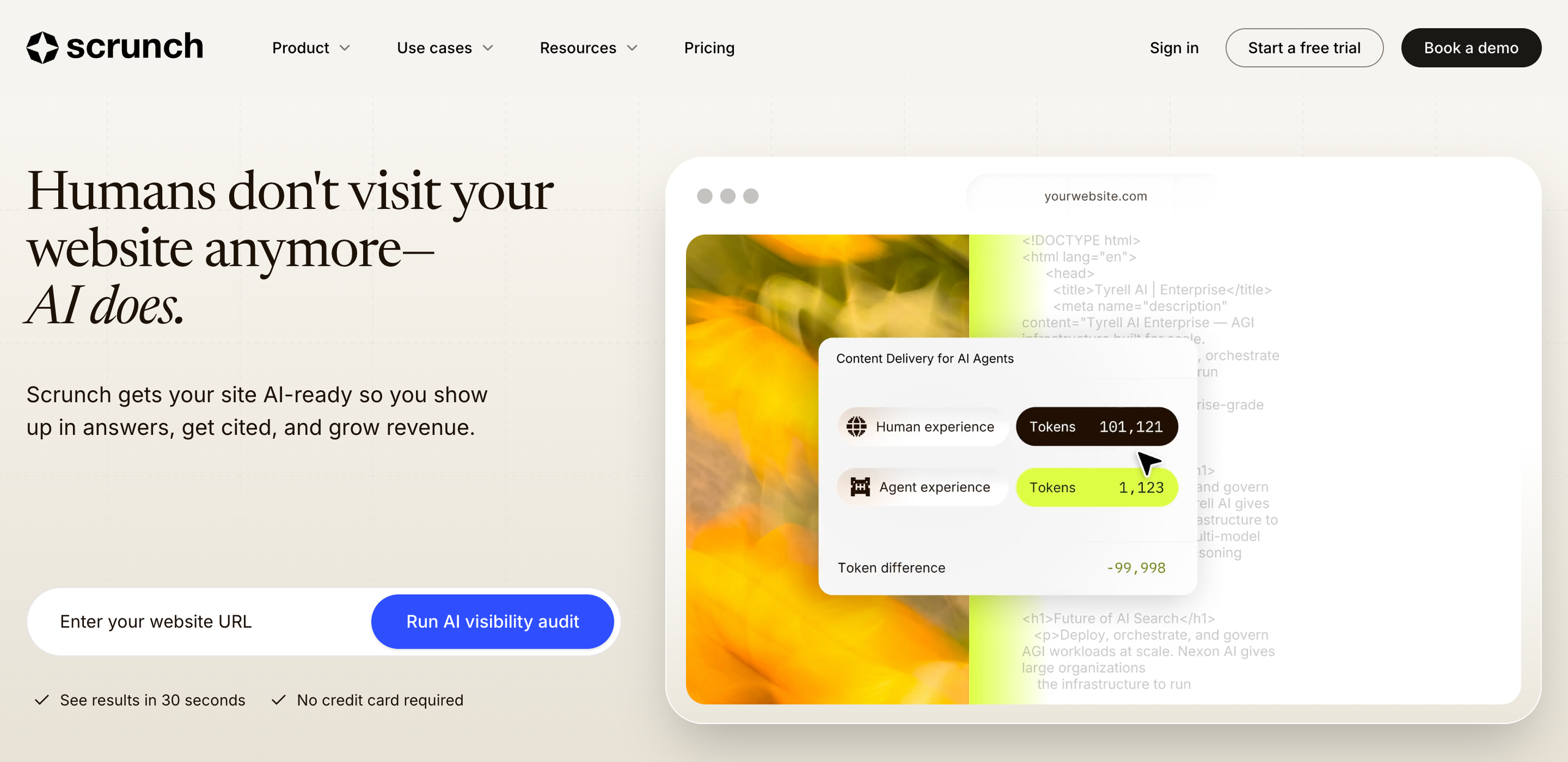
Scrunch tracks brand mentions, sentiment, and citations across 8 engines, including ChatGPT, Claude, Perplexity, and Google AI Mode. It scores each third-party source by how broadly it shapes answers. Beyond tracking, the platform runs an Agent Experience Platform that intercepts AI bots at the CDN layer and feeds them a machine-readable version of your site.
Best for: brand teams that arrange placements through partners.
Standout feature: Citations by Owner splits cited sources into your brand, third parties, competitors, and social, with custom segments. Citation movement is tracked per URL and prompt. A placement step sends that data to partners Noble and Stacker, with mention statuses shown in the app.
Pros:
- Reveals the most-cited domains and URLs
- Tracks citation trends by URL
- Includes sources on Core
Cons:
- Core covers 4 engines; Enterprise covers 9
- Core allows one country, without API access
Pricing:
- Brand Core: $250/mo for individual brand tracking across core engines.
- Agency Core: $500/mo for agency workflows and multi-client management.
- Enterprise: Custom quotes with dedicated support and advanced integrations.
Key Takeaway: Partner placements move fast, but they’re distribution you arrange, not coverage a journalist chose. For citation reporting by owner, Core gives a clean first read.
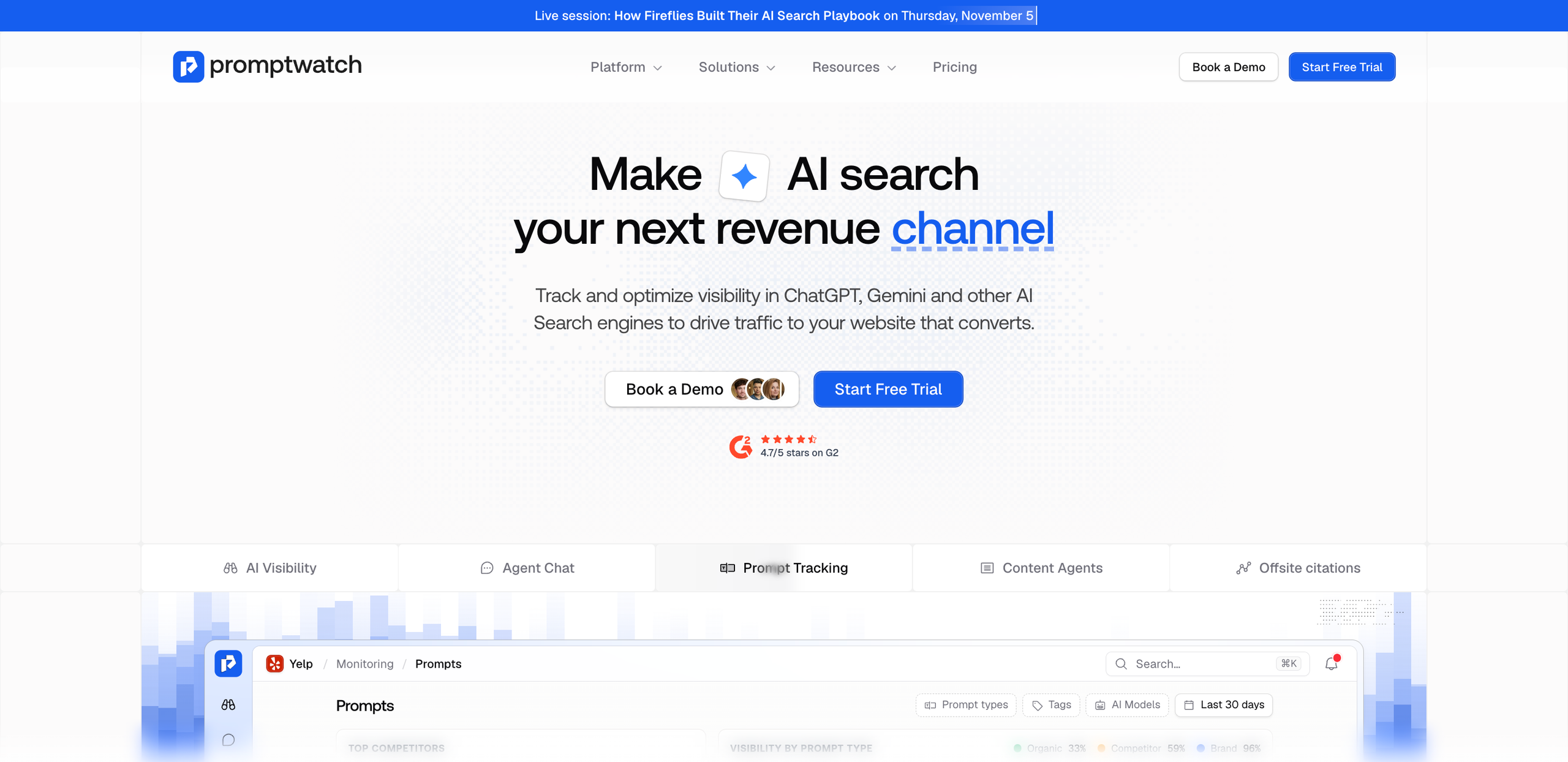
4. Promptwatch
Promptwatch scrapes live chat interfaces across more than 10 engines instead of relying on stripped-down API stubs, giving teams a true read on what buyers actually see. You get server and CDN crawler logs that catch ChatGPT or Claude bots hitting your URLs weeks before a citation ever shows up, plus Content Agents that publish straight to WordPress or Webflow.
Best for: outreach teams that want targets and draft pitches together.
Standout feature: Its offsite mention outreach module hunts down pages that cite competitors while ignoring your brand, then drafts custom pitch emails right inside the workspace. Huge time-saver for swamped account executives. It also shows which Reddit threads and YouTube videos AI models cite in your category.
Pros:
- Tracks daily on every plan
- Includes MCP and API access
- Combines crawler logs and citations
Cons:
- Essential stops at 50 prompts
- City tracking needs Business, sold through sales
Pricing:
- Essential: $95/mo
- Professional: $245/mo
- Business: $579/mo
- Enterprise: custom
Key Takeaway: Drafted emails save the blank-page hour, but treat them as notes, not pitches. A journalist spots a template in one line. Rewrite each hook around the story, and it pays its way.
5. Otterly.AI
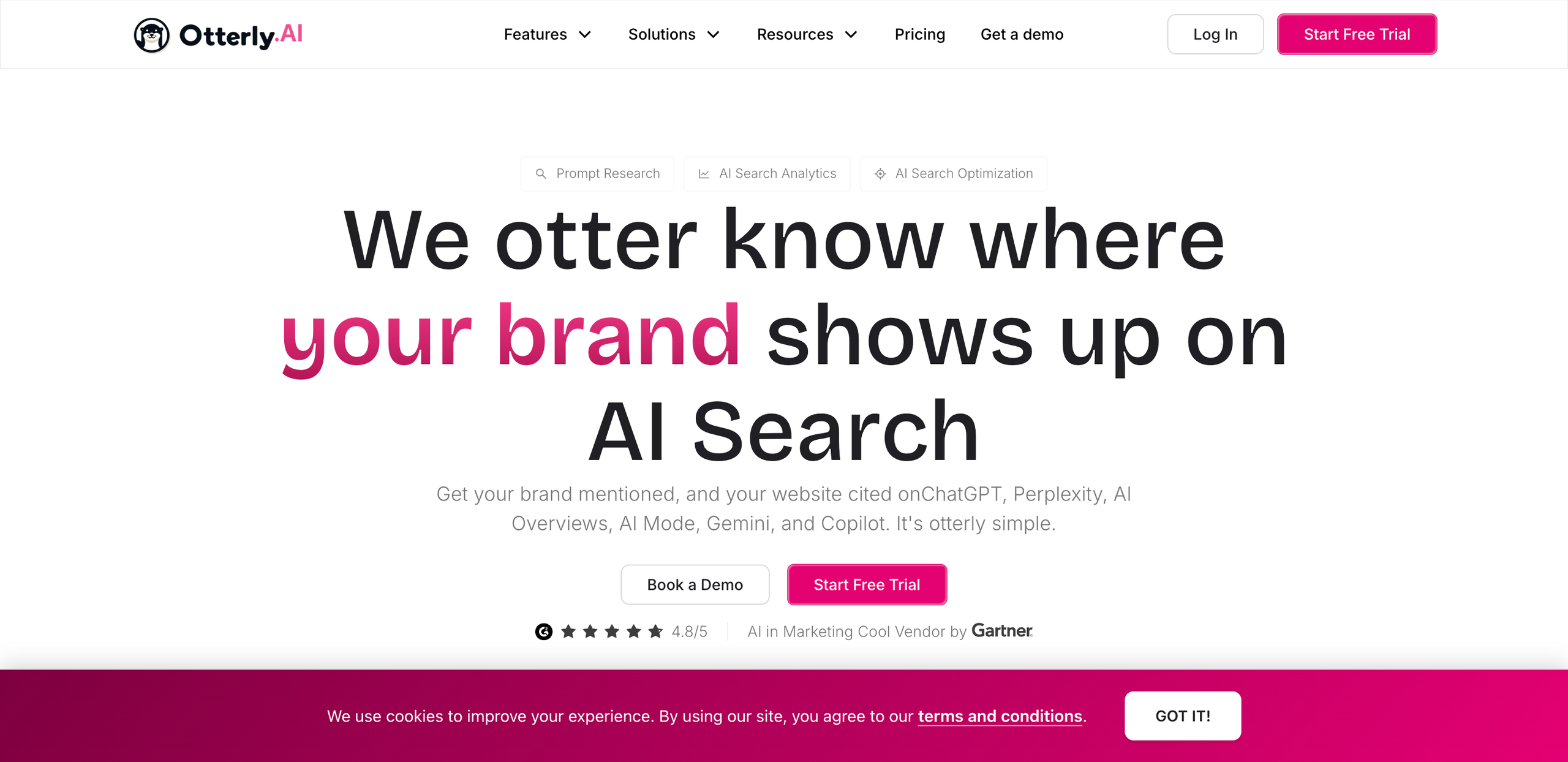
Otterly.AI logs every cited URL per prompt across 7 engines, including ChatGPT, Perplexity, Gemini, and Copilot, without relying on statistical sampling. It tracks link positions week to week, measures citation decay, and runs a mention check to verify whether a cited page actually names your client or just plugs a rival. Simple gap hunting, basically. Whenever a high-ranking source leaves you out, the platform turns that missing mention into a prioritized outreach task and pipes the data into Looker Studio or MCP workflows.
Best for: comms teams that add engines as client work demands.
Standout feature: Link Citations Analysis lists the links engines reference for your prompts, and Domain Ranking orders the cited domains, both from Lite upward. Otterly helps you work with PR, earned media, Reddit, Wikipedia, and socials.
Pros:
- Tracks ChatGPT, AI Overviews, Perplexity, and Copilot daily
- Includes export on every plan
- Adds API and Looker Studio from Standard
Cons:
- Gemini, Claude, and AI Mode are paid add-ons
- Lite allows 15 prompts
Pricing:
- Lite: $29/mo ($25/mo annual)
- Standard: $189/mo ($160/mo annual)
- Premium: $489/mo ($422/mo annual)
Key Takeaway: It provides the domain ranking, which is a fair first target list. Engine add-ons change the arithmetic, so price the plan with the engines your client’s buyers use before you commit campaign hours.
6. Rankscale
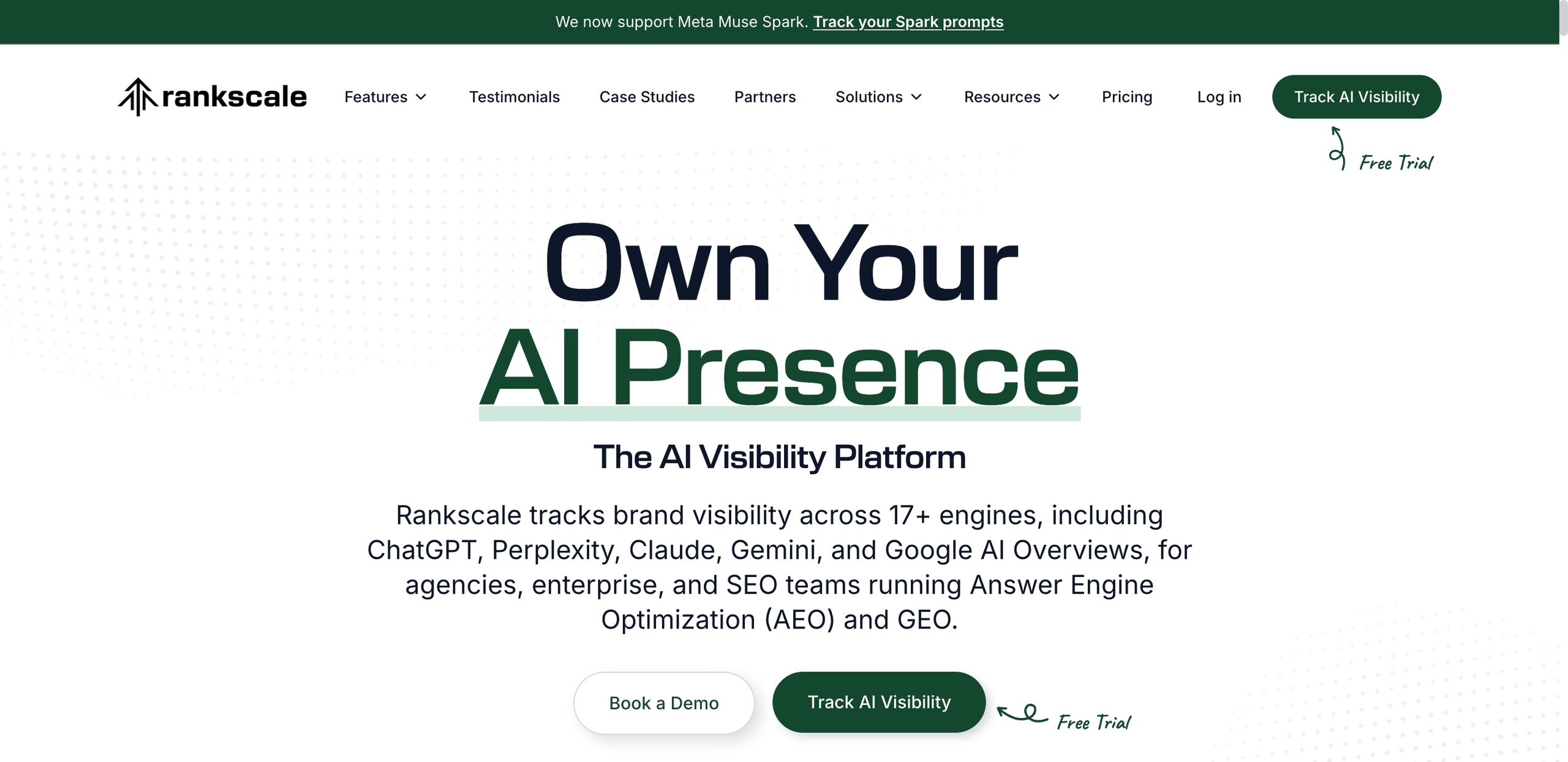
Rankscale runs on a credit system and unlocks its entire roster of 17-plus engines, including DeepSeek, Mistral, and Grok, on every single tier. You pay for query volume, never engine access. Alongside domain citation tracking and sentiment trends, it scores pages against 200-plus on-page factors to show why certain URLs win the answer slot. It also provides REST API access to feed citation targets straight into a pitch tracker.
Best for: analysts who set their own check schedule.
Standout feature: Sources Analysis shows which domains and URLs fill each engine’s source box. Citation Analysis links them to visibility gaps for you and competitors. Query fanout adds the domains an engine probed. Checks run hourly, daily, weekly, or monthly on every plan.
Pros:
- Exports to CSV and Google Sheets
- Rolls over unused credits
- Shares dashboards through links
Cons:
- REST API starts at Pro+
- Claude costs 2 credits per prompt, ChatGPT 0.25
Pricing:
- Essentials: $20/mo
- Pro: $99/mo
- Pro+ / Enterprise: Ranging from $229/mo up to $780/mo
Key Takeaway: Strong for the analyst who wants source boxes engine by engine. Plan credits before the pilot. A Claude-heavy prompt set drains a Pro allowance fast, and top-ups land mid-campaign.
7. ZipTie
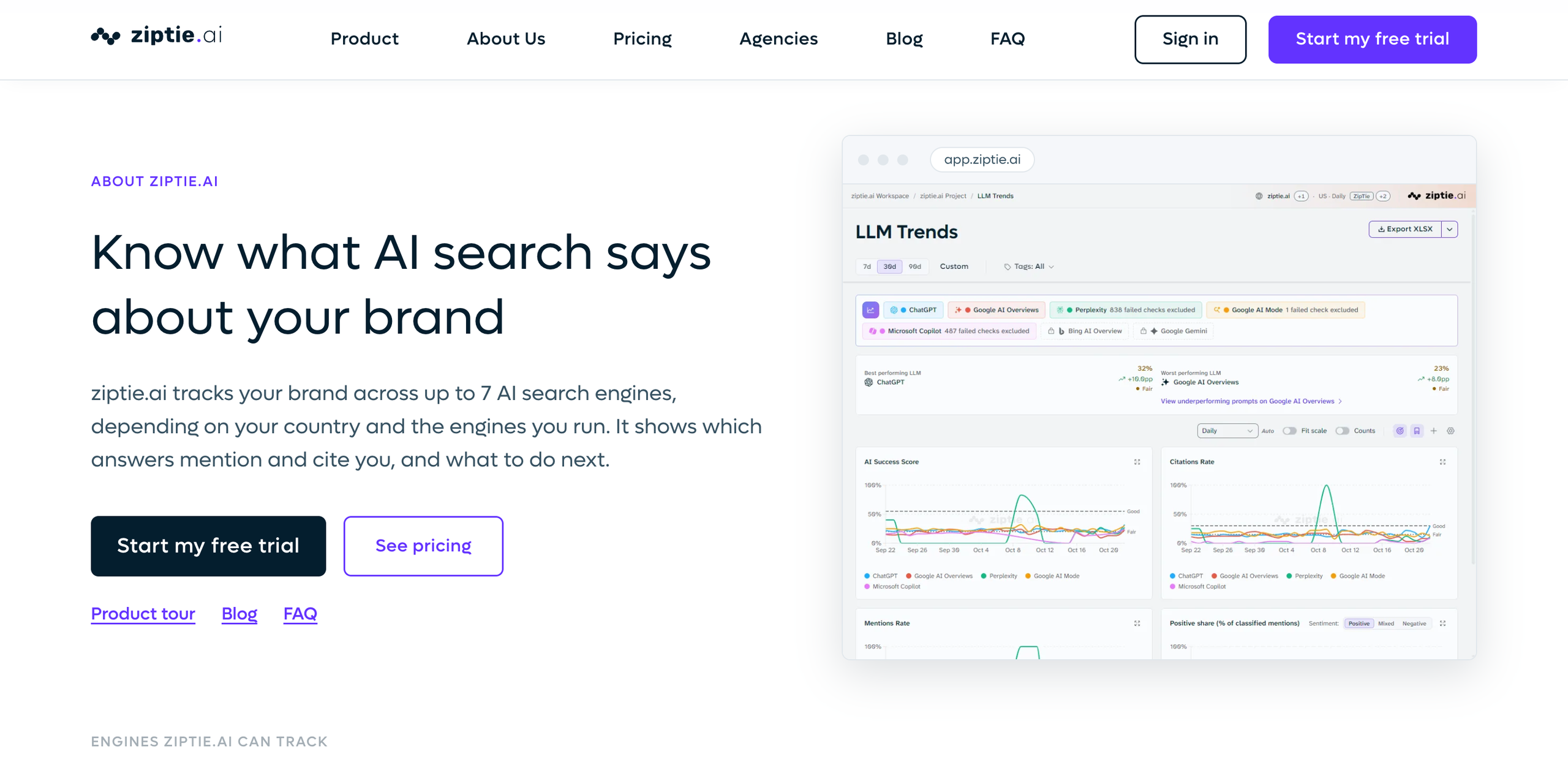
ZipTie captures live answers across 7 AI engines for roughly a penny per check, rolling citation rates, mention frequency, and weighted sentiment into one 0 to 100 AI Success Score. PR pros can stamp the exact date a placement goes live onto their trend line right beside Search Console clicks to see if the needle actually moved. No per-seat fees, no project caps, no competitor limits. Every tier ships with white-label PDF reports and share links that clients can open without logging in.
Best for: community PR teams whose clients get discussed on forums.
Standout feature: UGC Impact Analysis ranks the platforms engines cite by share and volume, then reads each thread and video to show whether your brand is named and how. ZipTie’s own product page assigns this step to PR, community, and social teams.
Pros:
- Shows which of your pages earn citations
- Exports white-label client reports
- Sets checks daily, weekly, or monthly
Cons:
- UGC Impact costs 80% extra as an add-on
- No alert rules, per the vendor
Pricing:
- Starter: $69/mo
- Standard: $99/mo
- Growth: $159/mo
Key Takeaway: If your topic lives on Reddit, this gives a direct read on which threads shape answers. Nobody pitches a Reddit thread. You join the conversation, so book the time as community hours.
8. Am I Cited
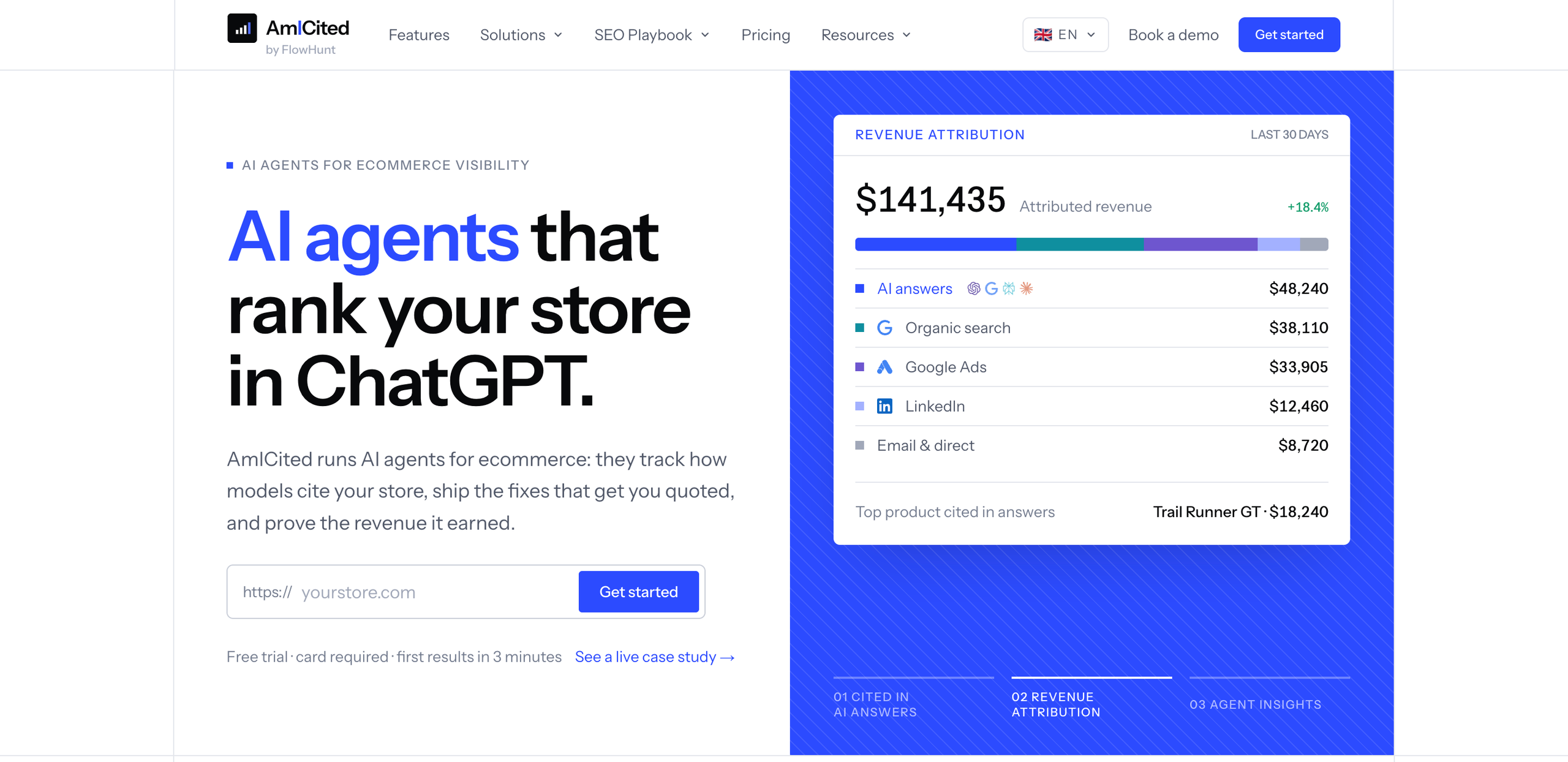
Am I Cited is a credit-based monitor that tracks citations, sentiment, and competitor share of voice across 8 engines, including ChatGPT, Perplexity, Claude, and Google AI Overviews. It stands out for generous prompt allowances, handing you 200 tracked prompts on the entry plan and scaling up to 3,200 per domain on Premium. We think teams chasing community visibility will appreciate how cleanly it breaks out Reddit and YouTube citations, plus every tier bundles AI agents that draft articles around visibility gaps.
Best for: ecommerce brand teams tying cited prompts to Shopify or Stripe orders.
Standout feature: UGC Influence ranks community domains like Reddit, Quora, and niche forums by citation count, with trend, then drills into each thread with its last-cited time. It also flags whether a cited thread names you.
Pros:
- Reports average citation rank
- Maps cited pages by AI provider
- Includes MCP on all plans
Cons:
- Starter has no daily schedules
- Some engines sit on higher plans
Pricing:
- Starter: $99/mo
- Pro: $499/mo
- Managed: $999/mo
Key Takeaway: The “names nobody” flag surfaces open conversations quickly. The product now leans toward ecommerce revenue attribution. B2B PR teams should check that fit before spending pilot hours.
Did You Know: AI Overviews usually include 8 to 11 citations, with 9 sources being the most common (6.55%), followed by 8 sources (6.47%) and 10 sources (6.27%)
Summary: Which AI Citation Analysis Tool Fits a PR Team?
We think SE Visible is the easy pick. This is the top choice when your crew needs a single coverage map showing the publications, blogs, and forums that Google’s AI Mode, AI Overviews, Gemini, Perplexity, and ChatGPT pull for a client’s category. It also shows outlets where an engine pulls a rival. SE Visible provides one map, zero guesswork. As for other options:
- Want outreach drafted for you? Grab Promptwatch.
- Living on Reddit and YouTube? Go with ZipTie’s UGC add-on or Am I Cited.
- Leaning on partners to land placements? Scrunch is your play.
According to open data, adoption of Google’s Preferred Sources has jumped more than 7x since January, and AI news carousels plaster them front and center. That is the whole playbook for getting cited by AI on breaking news. You just need to land coverage in outlets that real readers actively pick.
Related Reads:
FAQs: AI Citation Analysis Tools
Which citation analysis service is best for AI SEO?
Honestly, if you are building PR pitch lists, SE Visible sits at the top of the pile among AI citation analysis tools. It lays out the exact domains and URLs that Google’s AI Mode, AI Overviews, ChatGPT, and Gemini pull for your prompts, plus the sources feeding competitor mentions.
How do you get cited by ChatGPT?
Start by landing coverage in the publications, review sites, and forums ChatGPT already trusts for your niche. Feed those editors a story backed by raw data they can sink their teeth into, and keep your own site copy plain enough to quote cleanly. Track your ChatGPT citations across a full quarter. Maybe a big placement tilts the odds in your favor, though nothing ever guarantees a citation.
Do Perplexity citations come from the same sources as ChatGPT’s?
Barely. A Fudan University study of 10 AI search platforms found the average overlap across their top 20 cited domains is a measly 0.201. Perplexity pulls from wildly different sources than ChatGPT, so audit each engine separately before firing off a single pitch.
