

How fast your website loads decides a lot more than you might think. It decides whether a visitor stays or leaves, whether they buy or abandon their cart, and whether search engines show your site to more people or fewer.
We spent weeks of research to put together the most important page load time statistics for 2026. We cover user expectations from websites, conversion rates, bounce rates, SEO, mobile behavior, ecommerce, and the technical factors that slow websites down. If you run a website or an online business, these numbers will show you exactly why speed deserves a place on your priority list.
If you land on this report, we guarantee that you won’t go without insights for your next action plan on improving your website’s speed!
Let’s get into it, shall we?
Key Page Load Time Statistics (2026)
- The average web page loads in 2.5 seconds on desktop and 8.6 seconds on mobile.
- 47% of people expect a website to load in under 2 seconds.
- Every 1-second delay reduces user satisfaction by 16%.
- 53% of mobile visitors leave a page if it takes more than 3 seconds to load.
- Websites that load in 1 second have conversion rates around 40%. By the third second, this drops to 29%.
- The probability of a bounce increases by 32% as page load time goes from 1 second to 3 seconds.
- A B2B site that loads in 1 second converts 3 times better than one that loads in 5 seconds, and 5 times better than one that loads in 10 seconds.
- A 0.1 second improvement in mobile site speed increases retail conversions by 8.4%.
- Slow websites cost online retailers around $2.6 billion in lost sales every year.
- Only 3% of marketers say faster load speed is their top priority.
How Fast Do People Expect Websites to Load?
Users have very little patience for slow pages, and their expectations keep rising. Here is what the data says about what visitors expect and how they react when a website does not keep up:
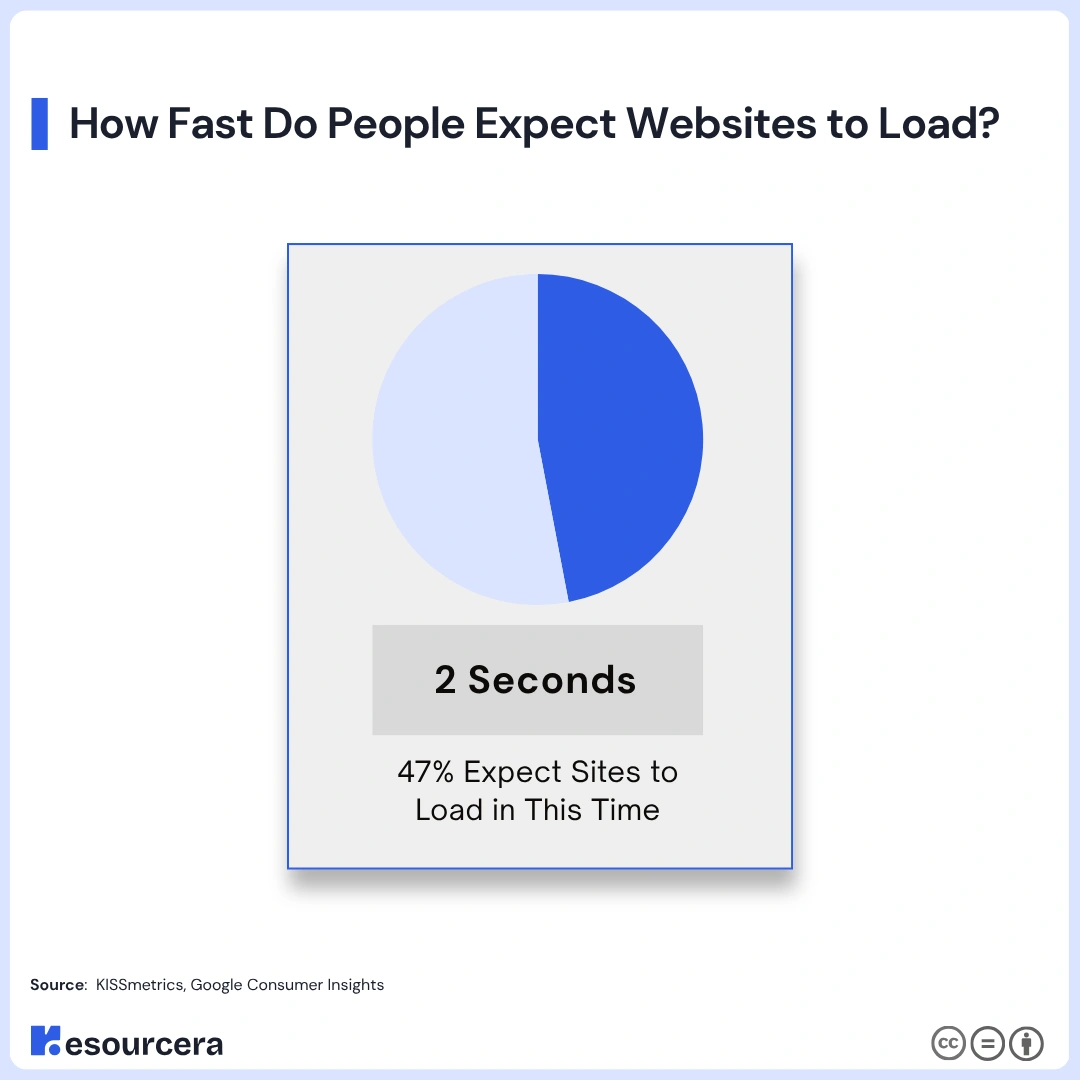
- 47% of people expect an average site to load in under 2 seconds.
- 53% of people leave a page if it takes longer than 3 seconds to load on their mobile devices.
- Nearly 70% of consumers say page speed impacts their willingness to buy from an online retailer.
- 54% of people say that as the load time for a brand’s mobile site increases, so does their frustration.
The takeaway is simple. You have roughly 2 to 3 seconds before a large share of your visitors decides your site is not worth the wait.
Sources: KISSmetrics, Google Consumer Insights, Unbounce Page Speed Report, Think with Google
Ecommerce Conversion Rate by Page Load Time
Conversion rate is where slow websites hurt the most, because the loss is measured directly in revenue. Portent studied over 100 million pageviews across B2B and B2C websites, and the pattern was clear at every load time interval.
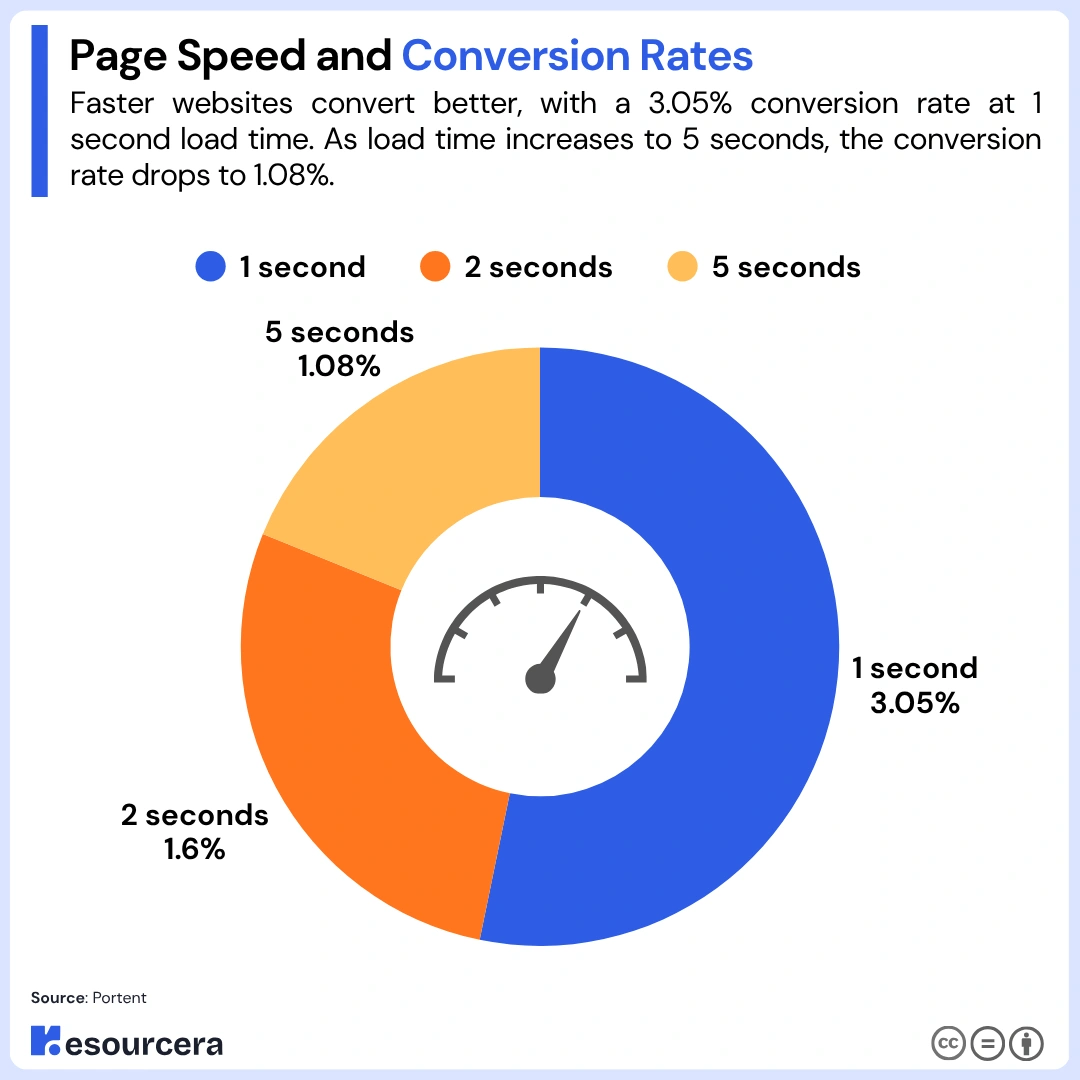
For ecommerce websites, here is how conversion rates and sales change as load time increases:
| Page Load Time | Ecommerce Conversion Rate |
|---|---|
| 1 second | 3.05% |
| 2 seconds | 1.6% |
| 5 seconds | 1.08% |
For lead generation websites, the drop is just as steep. Sites that load in 1 second have an average conversion rate of 39%. Sites that take 6 seconds to load convert at 18%. For every 1,000 visitors, that is the difference between 390 new leads and 180 new leads.
B2B websites follow the same rule. A B2B site that loads in 1 second has a conversion rate 3 times higher than a site that loads in 5 seconds, and 5 times higher than a site that loads in 10 seconds.
Source: Portent
How Page Speed Affects Bounce Rate
Bounce rate measures how many visitors leave your site after viewing only one page.
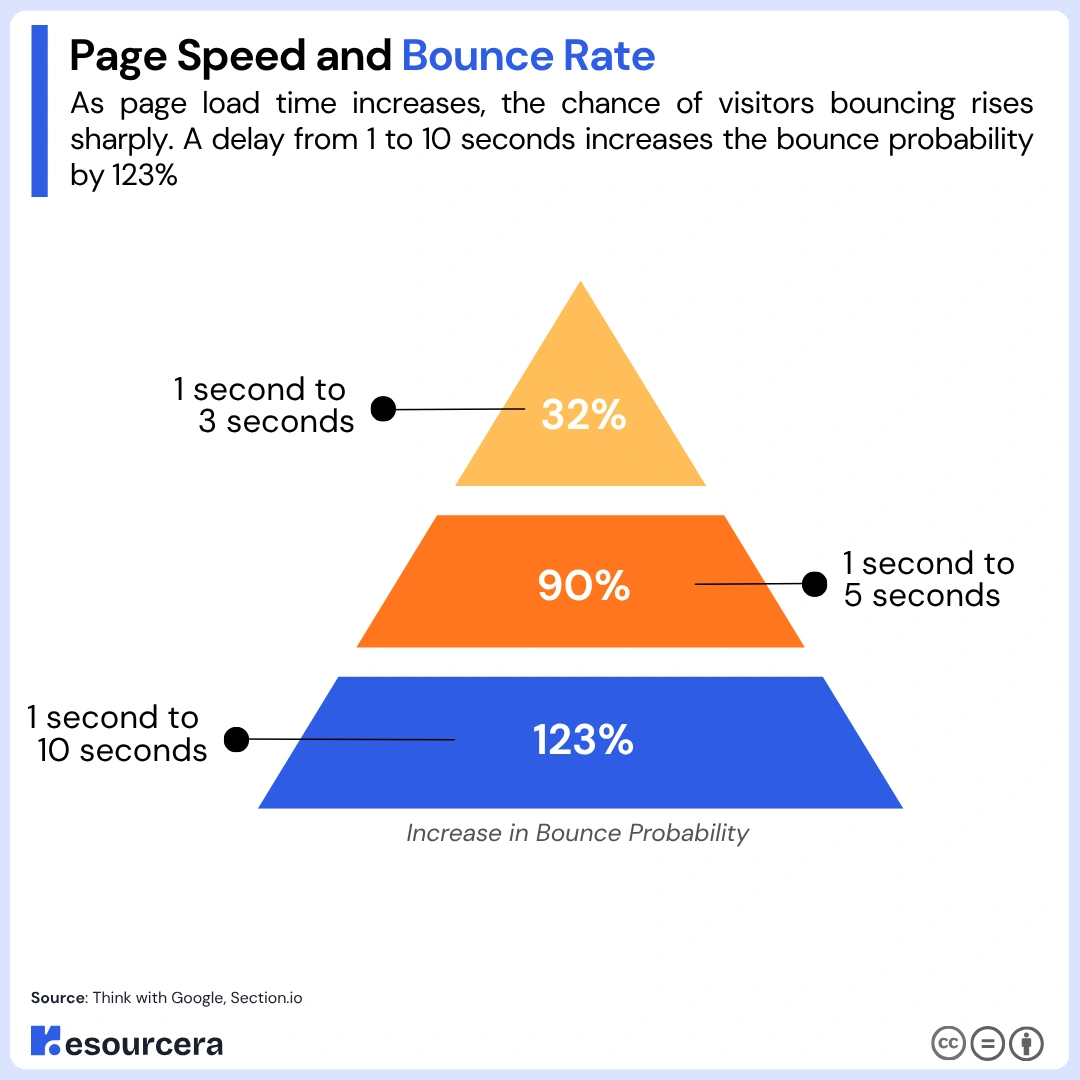
Google’s research on mobile page speed shows exactly how the probability of a bounce climbs as pages get slower:
| Load Time Increase | Increase in Bounce Probability |
|---|---|
| 1 second to 3 seconds | 32% |
| 1 second to 5 seconds | 90% |
| 1 second to 10 seconds | 123% |
Speed also affects how deeply people browse. Shoppers visit an average of 8.9 pages when load time is 2 seconds, but only 3.3 pages when load time is 8 seconds. A slow site does not just lose the first click. It cuts off the entire journey a visitor could have taken.
There is also a well known example from publishing. The BBC found that it loses an additional 10% of users for every extra second its pages take to load. For smaller websites with fewer loyal readers, the loss can be even higher.
Sources: Think with Google, Section.io, Creative Bloq (BBC)
Page Speed and SEO
Search engines want to send users to pages that load quickly, so speed is built into how rankings work. Here is what the data shows:
- Google uses page experience, including load speed, as a ranking factor for both mobile and desktop search results.
- According to SEO stats, Only 34% of the world’s top 100 websites pass their Core Web Vitals. On desktop, around 56% of them fail to deliver a good page experience, and on mobile, 64.6% fall short.
- Domains with good Core Web Vitals see a 3.7% increase in search visibility.
- Webpages on mobile take on average 70.9% longer to load than on desktop, which matters because Google uses mobile-first indexing.
Even the biggest brands struggle here. If most of the top 100 websites fail Core Web Vitals, passing them is a real opportunity for smaller sites to stand out in search.
Sources: Google Search Central, Tooltester, Sistrix
Average Page Load Time Benchmarks
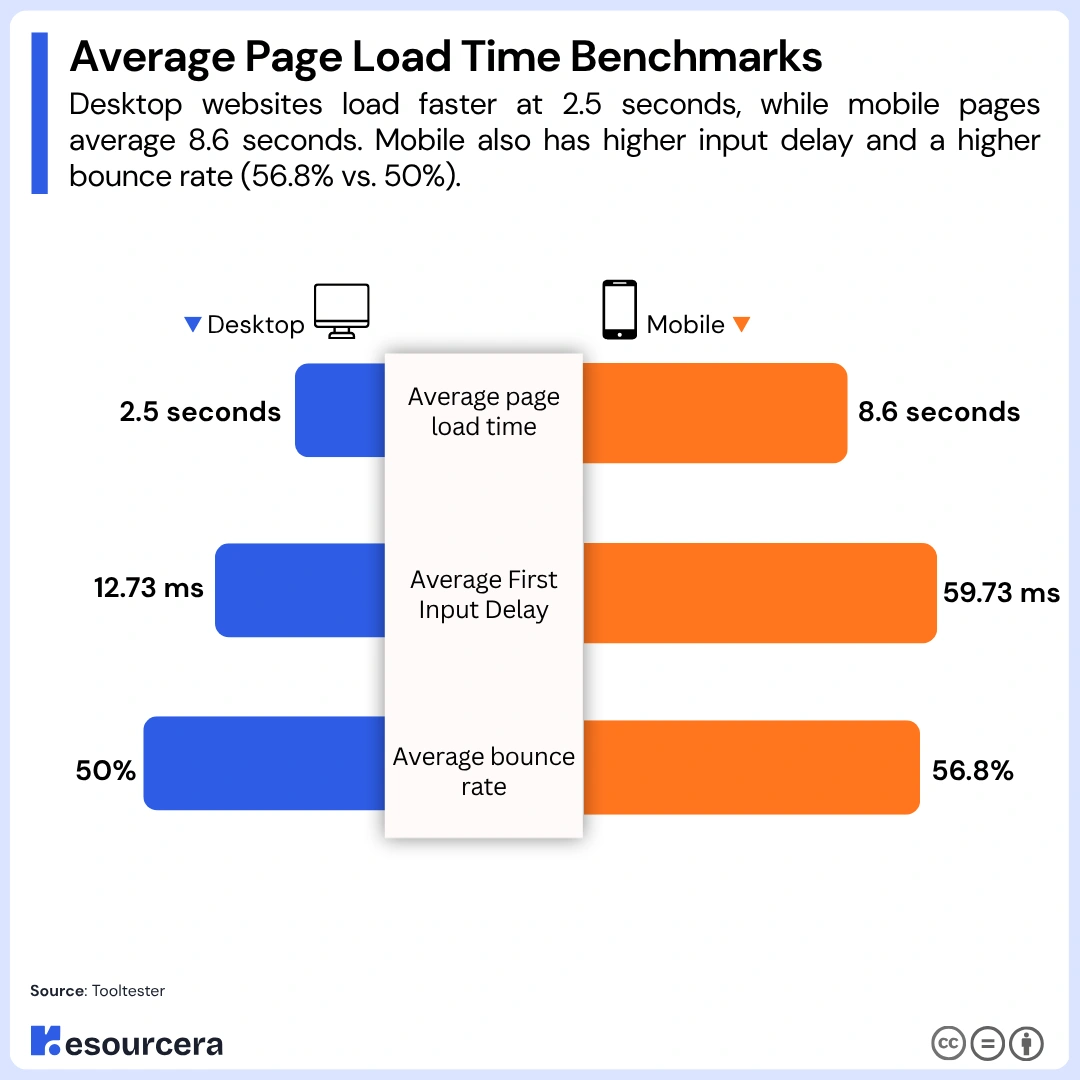
How does your website compare to the rest of the web? These benchmarks come from an analysis of the world’s top 100 websites and over 4 billion web visits:
| Metric | Desktop | Mobile |
|---|---|---|
| Average page load time | 2.5 seconds | 8.6 seconds |
| Average First Input Delay | 12.73 milliseconds | 59.73 milliseconds |
| Average bounce rate | 50% | 56.8% |
A few more benchmarks worth knowing:
- Tablet users have an average bounce rate of 51.6%, sitting between desktop and mobile.
- Desktop users have the highest average pages per session at 3.4.
- Retail sites see the highest engagement of any industry, with an average of 5.01 pages per session on desktop.
If your site loads faster than 2.5 seconds on desktop, you are ahead of the average. On mobile, the bar is much lower, which means a fast mobile site is one of the easiest ways to beat your competitors.
Source: Tooltester
Mobile Page Speed and User Behavior
More than half of all web traffic now comes from mobile devices, and mobile users are the least forgiving audience of all:
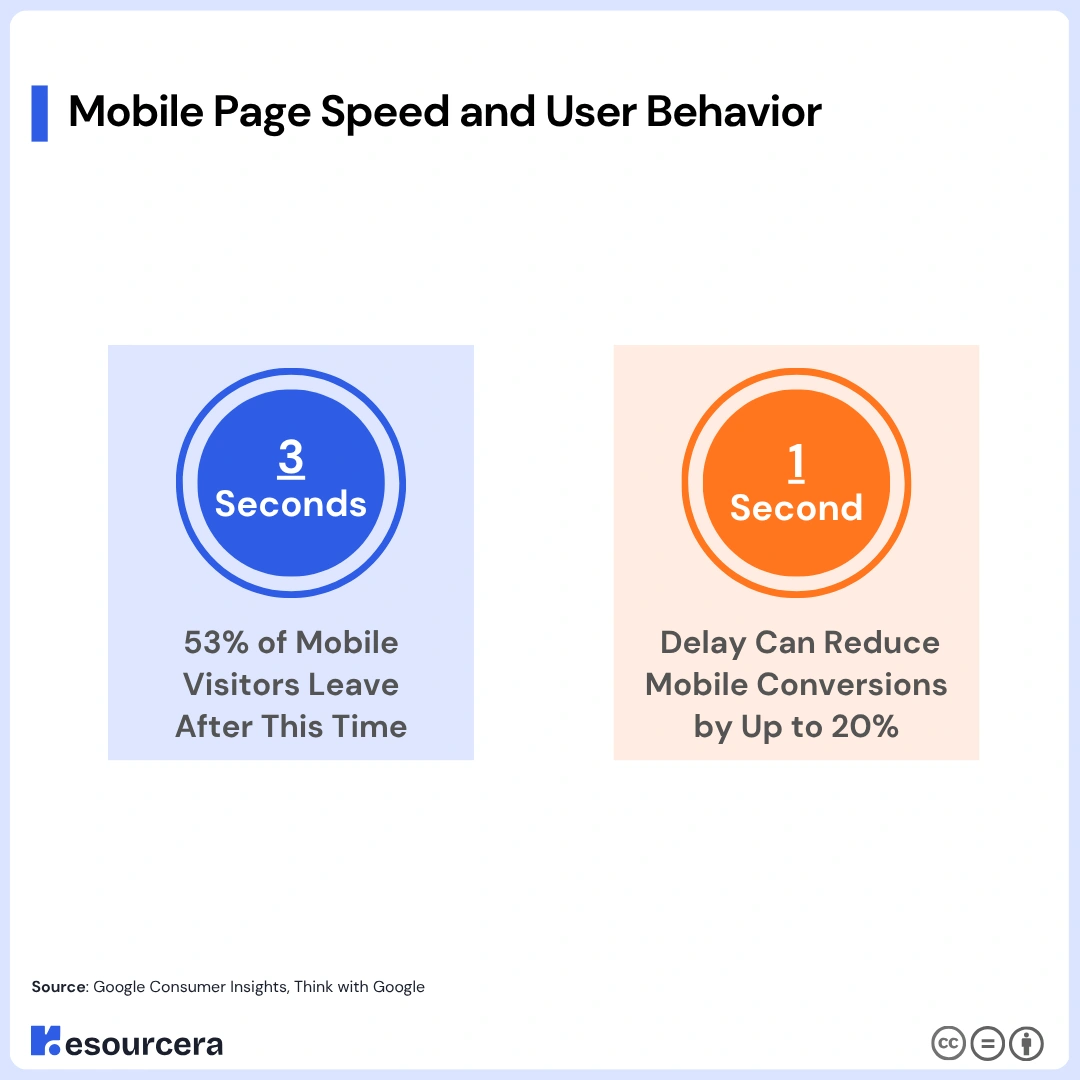
- 53% of mobile visitors leave a page if it takes more than 3 seconds to load.
- Every 1 second delay in mobile page load time can reduce conversions by up to 20%.
- 54% of users say their frustration increases as mobile load times increase.
- 79% of shoppers who are dissatisfied with site performance say they are less likely to purchase from the same site again.
The message from mobile users is consistent. A slow mobile site does not just lose one visit. It damages the chance of that person ever coming back.
Sources: Google Consumer Insights, Think with Google, Think with Google (page speed and load time)
Impact of Page Speed on Shopping Behavior
For online stores, speed and revenue are directly connected. These statistics show how much every fraction of a second matters in ecommerce:
- A 0.1 second improvement in mobile site speed increases retail conversions by 8.4%.
- 9.1% more shoppers add items to their basket when mobile site speed improves by just 0.1 seconds.
- 40% of shoppers will not wait more than 3 seconds before abandoning an ecommerce site.
- The highest ecommerce conversion rates, averaging 3.05%, occur on pages that load in 1 or 2 seconds.
- If an ecommerce site takes more than 4 seconds to load, 63% of shoppers will bounce.
- 64% of online shoppers will shop elsewhere if they have a poor user experience.
- 44% of online shoppers share negative online experiences with others.
- U.S. retail sites take an average of 6.3 seconds to load on mobile, more than twice Google’s recommended benchmark.
- 50% of ecommerce consumers have experienced slowdowns during high-traffic occasions such as sales events.
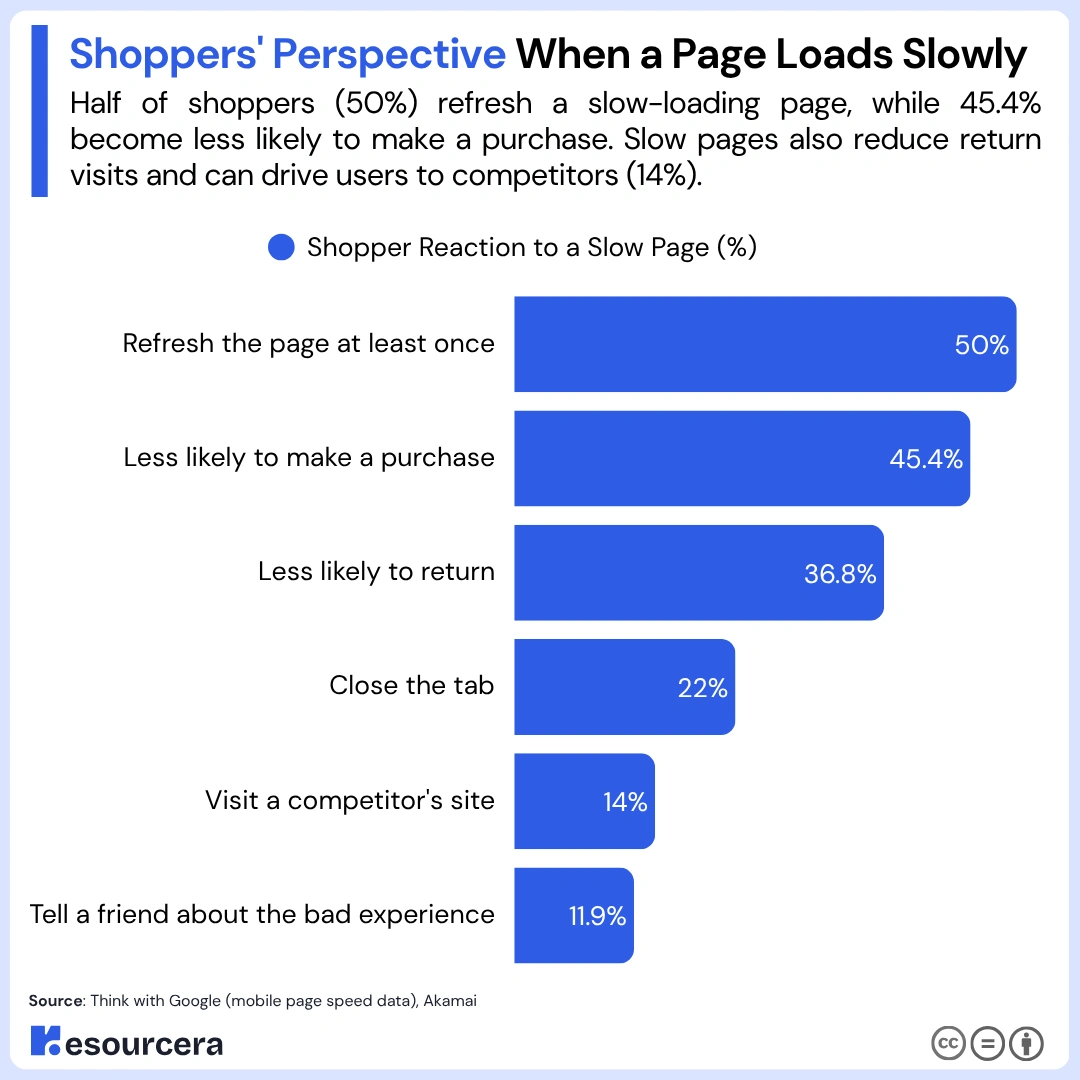
When a page loads slowly, here is what shoppers actually do:
| Shopper Reaction to a Slow Page | Percentage |
|---|---|
| Refresh the page at least once | 50% |
| Less likely to make a purchase | 45.4% |
| Less likely to return | 36.8% |
| Close the tab | 22% |
| Visit a competitor’s site | 14% |
| Tell a friend about the bad experience | 11.9% |
Sources: Think with Google (mobile page speed data), Akamai, Portent, Unbounce, Ecommerce Speed Hub, Think with Google (industry benchmarks), Envisage Digital, Akamai Performance Matters
Real Results: What Happens When Companies Improve Speed
The strongest proof that page speed pays off comes from companies that measured the impact themselves. Here are some of the most notable results:
| Company | What Changed | Result |
|---|---|---|
| Amazon | Every 100ms of latency | 1% reduction in sales |
| Walmart | 1 second faster load time | 2% more conversions |
| Staples | Homepage load time reduced by 1 second | Around 10% more conversions |
| Financial Times | A deliberate 1 second delay | 4.6% drop in article views |
| Zitmaxx Wonen | Achieved a perfect PageSpeed score | 50.2% more mobile conversions |
| Vodafone | 31% improvement in LCP | 8% increase in sales |
| Swappie | Improved Core Web Vitals, load time cut by 23% | 42% more mobile revenue |
| Renault | 1 second improvement in LCP | 13% rise in conversions |
| NDTV | 55% improvement in LCP | Bounce rate halved |
| Furnspace | Image optimization cut load times by 65% | Conversions doubled |
The pattern repeats across industries, company sizes, and countries. When load time goes down, revenue goes up.
Source: NitroPack case study compilation
Technical Factors That Slow Websites Down
Most slow websites share the same culprits, and images top the list:
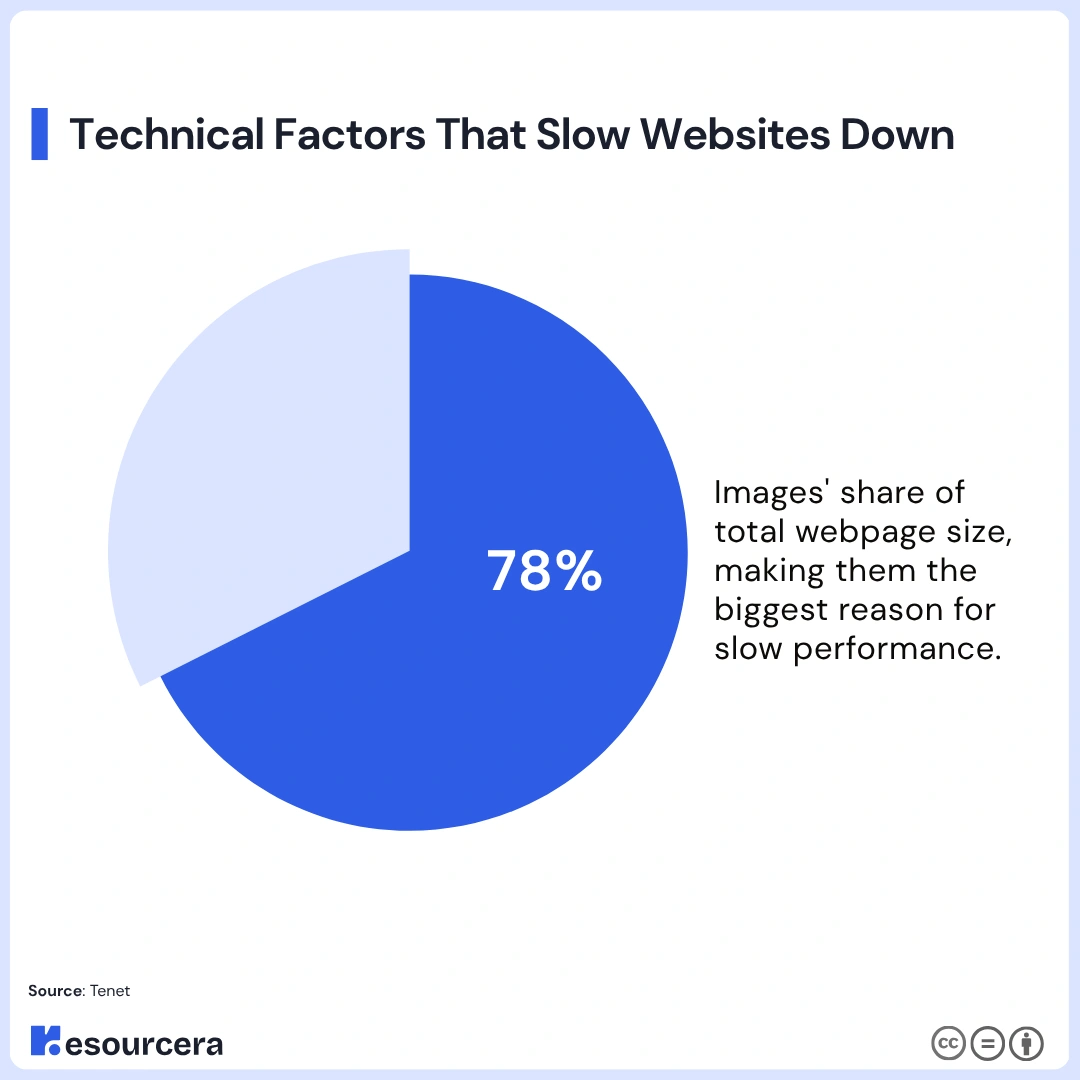
- Images take up about 78% of a webpage’s total size, making them the biggest reason for slow performance.
- An average webpage contains around 21 images that together weigh about 1.9 MB.
- Properly resizing images before uploading them can make a page load about 1.54 seconds faster.
- Around 10% of web pages could save about 1 MB of data by compressing their images.
- Reducing the total size of a website can improve its load time by up to 50%.
If you only fix one thing on a slow website, fix the images. Compressing and resizing them is the single biggest speed improvement most sites can make, and it costs nothing.
Source: Tenet
What Marketers Think About Page Speed
Here is the surprising part. Despite all the evidence above, very few businesses treat speed as a priority:
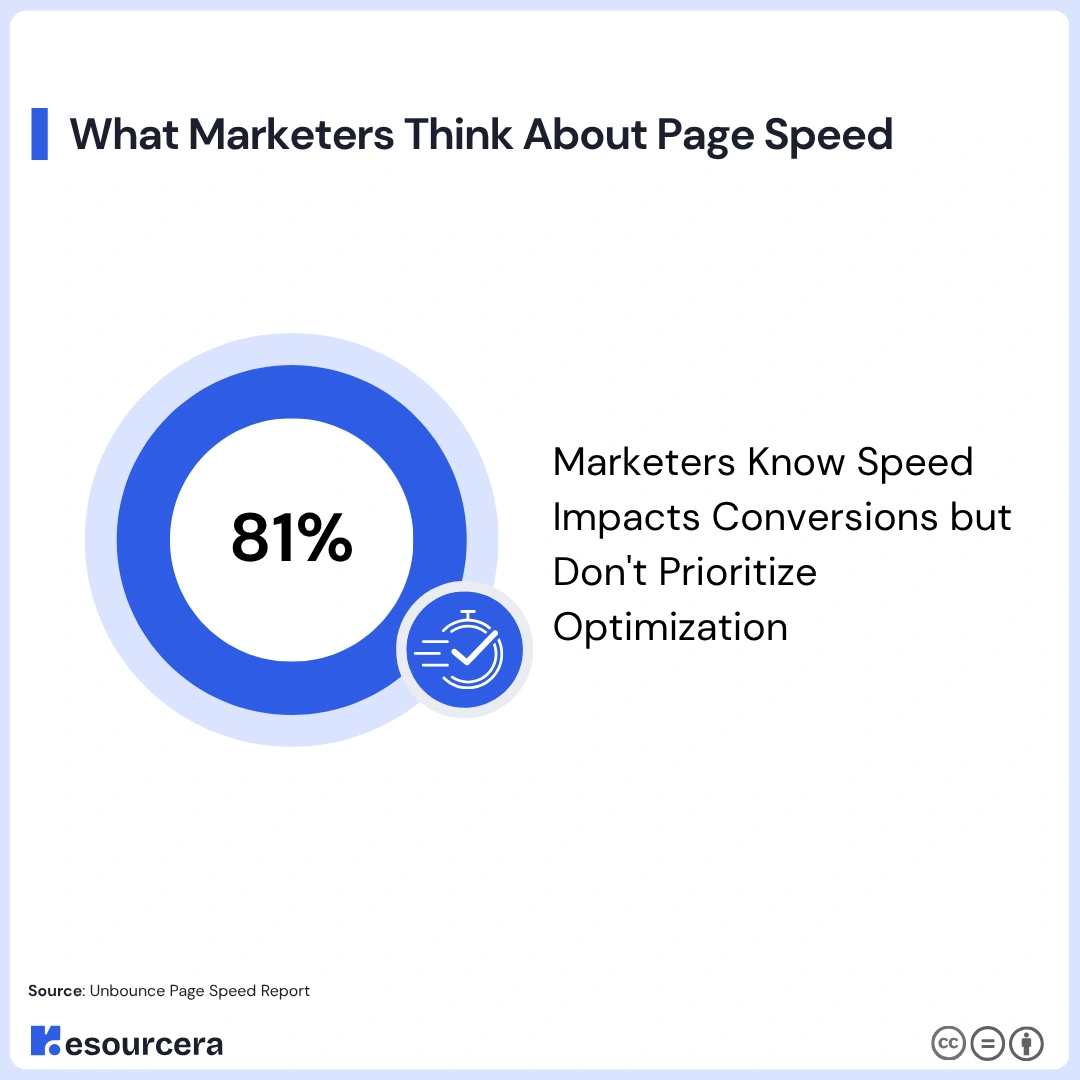
- 81% of marketers know speed impacts conversions, but do not prioritize optimization.
- Only 3% of marketers say faster load speed is their top priority.
- 73% of marketers think improving page speed is somewhat or very urgent.
Among the marketers who have taken action, here is what they have done:
- 57% have optimized images, videos, or other media files.
- 43% have implemented backend fixes like caching.
- 39% have run speed tests.
- 38% have reduced their dependence on JavaScript and CSS.
- 22% have implemented Accelerated Mobile Pages.
- 14% have started using a Content Delivery Network.
This gap between awareness and action is good news for anyone willing to act. If almost everyone knows speed matters but almost no one prioritizes it, the businesses that do will pull ahead.
Source: Unbounce Page Speed Report
How to Improve Your Page Load Time
The statistics make the case. Here is where to start if your website is slower than it should be:
- Compress and resize your images. Images make up the majority of page weight, so this is the highest-impact fix available.
- Use caching. Caching stores frequently accessed content so it does not have to be rebuilt on every visit.
- Use a Content Delivery Network. A CDN serves your content from servers closer to your visitors, cutting delivery time.
- Minify your code. Removing unused code, comments, and unnecessary formatting reduces file sizes and speeds up rendering.
- Reduce third-party scripts. Every extra script adds load time, so remove the ones you do not truly need.
- Invest in quality hosting. Cheap hosting often means slow server response times, which no amount of front-end optimization can fully fix.
- Test regularly. Tools like Google PageSpeed Insights and GTmetrix show you exactly what is slowing your pages down.
Final Thoughts
Page load time is not a technical detail. It is a business metric. The data shows that visitors decide within 2 to 3 seconds whether your website is worth their time, and every additional second costs you traffic, conversions, satisfaction, and search visibility.
The good news is that the fixes are well known and mostly inexpensive. Compress your images, cache your pages, clean up your code, and choose hosting that can keep up. The businesses that treat speed as a priority are still a small minority, which means the opportunity to get ahead is wide open.

